

Coffee
Coffee
Volume 2: Technology
Paperback
Couldn't load pickup availability
Join our rewards scheme and earn 423 reward points on this purchase!
Earn 423 points on this!
Sign in or Sign up!- Release Date: 30/09/2011
- Barcode: 9789401080286
- Imprint: Springer
- Publisher: Springer
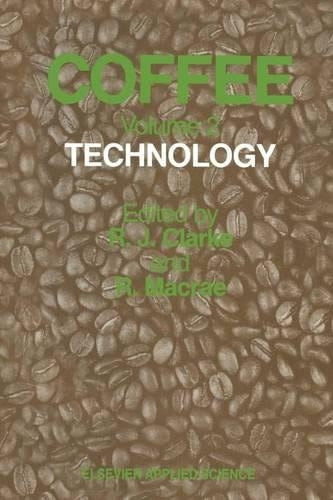

Coffee
Softcover reprint of the original 1st ed. 1987
Couldn't load pickup availability
Collapsible content
DESCRIPTION
Volume 2: Technology
The present volume, Volume 2 in this planned series on coffee, deals with processing and follows on naturally from the first volume on the chemistry of coffee, which described its numerous constituents in the green (raw) and various product forms.
The present volume, Volume 2 in this planned series on coffee, deals with processing and follows on naturally from the first volume on the chemistry of coffee, which described its numerous constituents in the green (raw) and various product forms. We have already remarked that coffee has great compositional complex ity, and this complexity of understanding extends when we come to that is, the many processes involved in the roasting consider its processing; of green coffee and its subsequent conversion into a consumable brew, especially through extraction and drying into an instant coffee. The simple brewing of roasted and ground coffee with water in the home also possesses considerable mystique and needs know-how for optimal results. The choice of green coffees from an almost bewildering array of different types available, through species/variety differences and different methods of processing from the coffee cherry to the green coffee bean, needs understanding and guidance. Furthermore, various forms of pre-treatment of green coffee before roasting are available. Some of these are little known, but others such as decaffeination, for those who desire roasted or instant coffee with little or no caffeine, are now becoming well established. Finally, both the processing of coffee cherries to coffee beans, leaving a range of different waste products (pulp, hulls, husk, parchment, etc.), and of roasted coffee after industrial aqueous extraction, leaving spent coffee grounds, provide waste products that have found considerable commercial value in different ways.
ADDITIONAL DETAILS
DELIVERY & RETURNS
UK Delivery:
- Free delivery on all orders of £10 or more.
- £1.49 delivery fee on orders below £10.
- UK orders are shipped via Royal Mail 2nd Class.
International Delivery:
- Flat rate delivery charges vary by country.
Dispatch and Delivery Times:
- All orders are shipped from our warehouse in Northampton, UK within 48 hours of receipt during working hours.
- UK mainland orders typically arrive within 3-5 working days via Royal Mail 2nd Class.
- International estimated delivery times:
- Europe & Channel Islands: 7 to 10 working days
- USA: 7 to 15 working days
- Rest of the World: 9 to 21 working days
View our full delivery infomation here.
-
OVER
2 MILLION PRODUCTS
-
60 MILLION CUSTOMERS
ACROSS 190 COUNTRIES
You might also like
Loading recommendations...