

Intrigue and Revolution
Intrigue and Revolution
Hardback
Couldn't load pickup availability
Join our rewards scheme and earn reward points on this purchase!
Earn points on this!
Sign in or Sign up!- Release Date: 18/06/2015
- Barcode: 9781904113874
- Genre: Society & Culture
- Subgenre: Social Sciences
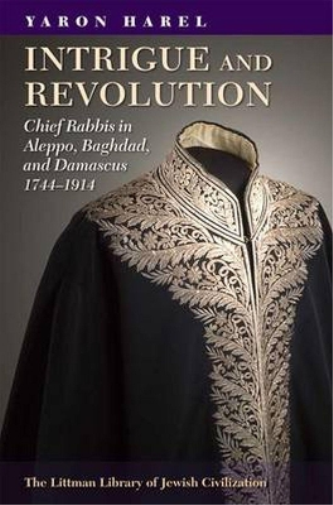

Intrigue and Revolution
Couldn't load pickup availability
Collapsible content
DESCRIPTION
Chief Rabbis in Aleppo, Baghdad, and Damascus, 1774-1914. A dramatic account of traditional Jewish society in the Ottoman Empire at a time when societal norms were being challenged. Thisis a book of unexpected drama: all eleven chief rabbis appointed in this periodof unprecedented change in the Jewish communities of the Fertile Crescentbecame the subject of controversy and were subsequently dismissed. This tookplace against a background of events rarely discussed in the context of Jewishsociety: crime, hooliganism, slander, power struggles, sexual promiscuity, andeven assaults and assassination attempts on rabbis. Using a wide range oftestimonies gleaned from Ottoman Jewish, Arabic, and European sources, YaronHarel paints a colourful picture of these upheavals set firmly in the socialand political context of the time and far removed from the commonly acceptedimage of Jewish communities in the Ottoman empire. Jewswere also affected by modernization and political conflict in the wider societyof the time, and these too gave rise to power struggles. The chief rabbis wereat the forefront of these confrontations, especially those that resulted fromthe new inclination towards Western culture. Most of them recognized that thechallenges of modernization had to be met, although in a way that did notendanger religious principles. Their openness to change stemmed from a concernfor the future of the communities for which they were responsible, but theywere often vociferously opposed by those who were free from suchresponsibility. The communal politics that ensued were sometimes heated to thepoint of violence. Inthe latter years of the empire, many Jews came to support the Young Turks, withtheir promise of liberty and equality for all. The atmosphere of the time wassuch that rabbis had to develop political awareness and engage in Ottomanpolitics. This was another source of tension within the community since the newregime punished anyone suspected of opposition severely. Thislively and fascinating study based on little-known sources offers a lensthrough which to view the Jewish society of the Ottoman empire at a time whenall the traditional norms were being challenged.
DELIVERY & RETURNS
UK Delivery:
- Free delivery on all orders of £10 or more.
- £1.49 delivery fee on orders below £10.
- UK orders are shipped via Royal Mail 2nd Class.
International Delivery:
- Flat rate delivery charges vary by country.
Dispatch and Delivery Times:
- All orders are shipped from our warehouse in Northampton, UK within 48 hours of receipt during working hours.
- UK mainland orders typically arrive within 3-5 working days via Royal Mail 2nd Class.
- International estimated delivery times:
- Europe & Channel Islands: 7 to 10 working days
- USA: 7 to 15 working days
- Rest of the World: 9 to 21 working days
View our full delivery infomation here.
-
OVER
2 MILLION PRODUCTS
-
60 MILLION CUSTOMERS
ACROSS 190 COUNTRIES
You might also like
Loading recommendations...