


Consensus, Cooperation and Conflict
Consensus, Cooperation and Conflict
The Policy Making Process in Denmark
Hardback
Couldn't load pickup availability
Join our rewards scheme and earn reward points on this purchase!
Earn points on this!
Sign in or Sign up!- Release Date: 27/03/2002
- Barcode: 9781840640915
- Imprint: Edward Elgar Publishing
- Publisher: Edward Elgar Publishing


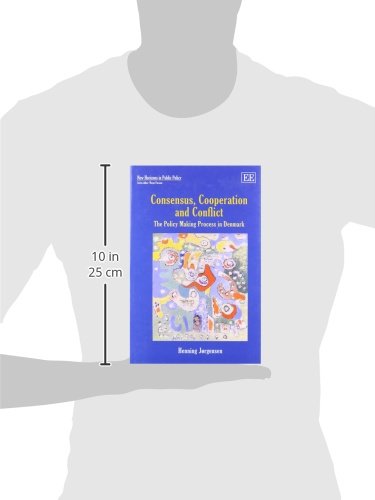

Consensus, Cooperation and Conflict
Couldn't load pickup availability
Collapsible content
DESCRIPTION
The Policy Making Process in Denmark This path-breaking book provides an historical, systematic analysis of Danish policy developments, taking a critical, post-positivist approach. It highlights the internal lines of conflict but also demonstrates the co-operative nature of Danish decision-makers. The author describes and explains the individual policy-style evident in several different arenas including the economy, the labour market, health, education, agriculture and modernisation. The analysis shows that much can be learned and applied from the Danish policy making and implementation experiences. Providing a comprehensive overview of the Danish welfare system, the author demonstrates that although Denmark may not have realised 'the third way', it has in fact found its own unique way. Henning Jorgensen not only provides an accurate account of what lies behind the consensual policy style in Denmark, but also offers an insight into areas of disharmony and the strategies for eventual resolution. This book is strongly recommended for all scholars and students of public policy and political science.
Providing a comprehensive overview of the Danish welfare system, the author demonstrates that although Denmark may not have realised `the third way’, it has in fact found its own unique way. This book is strongly recommended for all scholars and students of public policy and political science.
Denmark is regarded by many as a model European country. In a short space of time unemployment rates have more than halved, inflation has remained low and the welfare state has not only been consolidated but improved. A new policy-mix has proved to be effective, but what exactly does it entail?
ADDITIONAL DETAILS
DELIVERY & RETURNS
UK Delivery:
- Free delivery on all orders of £10 or more.
- £1.49 delivery fee on orders below £10.
- UK orders are shipped via Royal Mail 2nd Class.
International Delivery:
- Flat rate delivery charges vary by country.
Dispatch and Delivery Times:
- All orders are shipped from our warehouse in Northampton, UK as soon as stock is available.
- UK mainland orders typically arrive within 3-7 working days via Royal Mail 2nd Class.
- International estimated delivery times:
- Europe & Channel Islands: 7 to 10 working days
- USA: 7 to 15 working days
- Rest of the World: 9 to 30 working days
View our full delivery infomation here.
-
OVER
2 MILLION PRODUCTS
-
60 MILLION CUSTOMERS
ACROSS 190 COUNTRIES
You might also like
Loading recommendations...