

Breaking the Banks
Breaking the Banks
Representations and Realities in New England Fisheries, 1866-1966
Paperback
Couldn't load pickup availability
Join our rewards scheme and earn reward points on this purchase!
Earn points on this!
Sign in or Sign up!- Release Date: 10/08/2018
- Barcode: 9781625343918
- Imprint: University of Massachusetts
- Publisher: University of Massachusetts Press
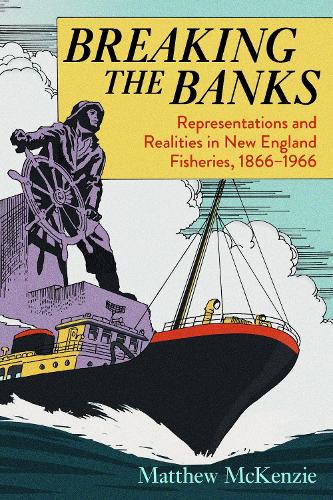

Breaking the Banks
Couldn't load pickup availability
Collapsible content
DESCRIPTION
Representations and Realities in New England Fisheries, 1866-1966
With skillful storytelling, Matthew McKenzie weaves together the industrial, cultural, political, and ecological history of New England's fisheries through the story of how the Boston haddock fleet - one of the region's largest and most heavily industrialized - rose, flourished, and then fished itself into near oblivion before the arrival of foreign competition in 1961.
With skillful storytelling, Matthew McKenzie weaves together the industrial, cultural, political, and ecological history of New England's fisheries through the story of how the Boston haddock fleet - one of the region's largest and most heavily industrialized - rose, flourished, and then fished itself into near oblivion before the arrival of foreign competition in 1961. This fleet also embodied the industry's change during this period, as it shucked its sail-and-oar, hook-and-line origins to embrace mechanized power and propulsion, more sophisticated business practices, and political engagement.
Books, films, and the media have long portrayed the Yankee fisherman's hard-scrabble existence, as he faced brutal weather on the open seas and unnecessary governmental restrictions. As McKenzie contends, this simplistic view has long betrayed commercial fisheries' sophisticated legislative campaigns in Washington, DC, as they sought federal subsidies and relief and, eventually, fewer constricting regulations. This clash between fisheries' representation and their reality still grips fishing communities today as they struggle to navigate age-old trends of fleet consolidation, stock decline, and intense competition.
DELIVERY & RETURNS
UK Delivery:
- Free delivery on all orders of £10 or more.
- £1.49 delivery fee on orders below £10.
- UK orders are shipped via Royal Mail 2nd Class.
International Delivery:
- Flat rate delivery charges vary by country.
Dispatch and Delivery Times:
- All orders are shipped from our warehouse in Northampton, UK within 48 hours of receipt during working hours.
- UK mainland orders typically arrive within 3-5 working days via Royal Mail 2nd Class.
- International estimated delivery times:
- Europe & Channel Islands: 7 to 10 working days
- USA: 7 to 15 working days
- Rest of the World: 9 to 21 working days
View our full delivery infomation here.
-
OVER
2 MILLION PRODUCTS
-
60 MILLION CUSTOMERS
ACROSS 190 COUNTRIES
You might also like
Loading recommendations...