

Thaddeus William Harris (1795-1856)
Thaddeus William Harris (1795-1856)
Hardback
Couldn't load pickup availability
Join our rewards scheme and earn reward points on this purchase!
Earn points on this!
Sign in or Sign up!- Release Date: 01/11/2007
- Barcode: 9781611460445
- Genre: History
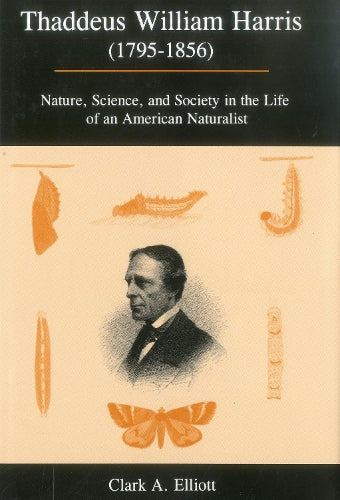

Thaddeus William Harris (1795-1856)
Couldn't load pickup availability
Collapsible content
DESCRIPTION
Nature, Science, and Society in the Life of an American Naturalist
This book explores the origins of Harris’s scientific interests, his struggle to find a professional position and research resources, and his entomological investigations and library career. It also examines his development of strategies for publishing scientific and popular work.
Thaddeus William Harris first made his living as a physician and for many years thereafter as Harvard librarian. He also taught natural history in Harvard College—Henry David Thoreau was one of his students—but his desire for a full-time professorship was never realized. He is chiefly remembered as a naturalist and is generally considered the 'founder of applied entomology' in the United States. His historical reputation is linked to his Treatise on Some of the Insects Injurious to Vegetation. Going beyond the Treatise and examining Harris's life through his correspondence, reveals a picture that is more complex than his traditional reputation would suggest. In addition to a review of his familial and scientific origins, the author explores how Harris tried to build a scientific career, and looks at his work as an academic librarian. His research and writing per se is examined. While his work on insects as agricultural pests is well-known, in the 1830s Harris prepared the earliest systematic listing and classification of American insects. Most importantly, in his more specialized studies, he became interested in nocturnal Lepidoptera (moths), a group not much studied in America at the time. Here, Harris brought to bear his great knowledge of life histories of insects that was so germane to his agricultural effort, as well as some innovative uses of wing vein patterns, as aids to taxonomy. The book discusses his publishing strategies for scientific and popular work and his relations to individuals and organizations in the scientific community. Harris's well-formulated views on correct personal and communal conduct in natural history presents the context for a consideration of scientific practice in his era. The study also delves into his political and religious beliefs and his attitudes to the natural world and how these related to his scientific program.
DELIVERY & RETURNS
UK Delivery:
- Free delivery on all orders of £10 or more.
- £1.49 delivery fee on orders below £10.
- UK orders are shipped via Royal Mail 2nd Class.
International Delivery:
- Flat rate delivery charges vary by country.
Dispatch and Delivery Times:
- All orders are shipped from our warehouse in Northampton, UK within 48 hours of receipt during working hours.
- UK mainland orders typically arrive within 3-5 working days via Royal Mail 2nd Class.
- International estimated delivery times:
- Europe & Channel Islands: 7 to 10 working days
- USA: 7 to 15 working days
- Rest of the World: 9 to 21 working days
View our full delivery infomation here.
-
OVER
2 MILLION PRODUCTS
-
60 MILLION CUSTOMERS
ACROSS 190 COUNTRIES
You might also like
Loading recommendations...