

Bad Medievalism and the Modernity Problem
Bad Medievalism and the Modernity Problem
Paperback
Couldn't load pickup availability
Join our rewards scheme and earn reward points on this purchase!
Earn points on this!
Sign in or Sign up!- Release Date: 04/11/2025
- Barcode: 9781531512415
- Genre: History
- Sub-Genre: European History
- Imprint: Fordham University Press
- Publisher: Fordham University Press
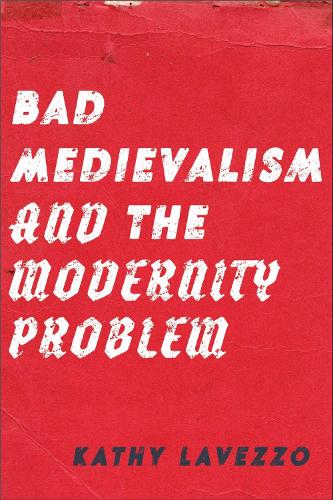

Bad Medievalism and the Modernity Problem
Couldn't load pickup availability
Collapsible content
DESCRIPTION
Challenges the assumptions made over the medieval/modern divide by examining the medieval roots of modern racism
Humanists have long insisted on a chasm separating modernity and the Middle Ages. In Bad Medievalism and the Modernity Problem, Kathy Lavezzo demonstrates how the temporal divide scholars typically accept is a fiction that has shaped racial discourse over a longue durée. The hard line drawn between "then" and "now" is of a piece with the line separating whiteness from humans deemed irrevocably other. Thus, Lavezzo advocates a "bad"—that is, depressing and disturbing, even nauseating—historicism attuned to the interpenetration of race, whiteness and periodicity in the "west."
Teasing out the dialectical invocation of both periods by figures as diverse as W. E. B. Du Bois, Carolyn Bynum, Stuart Hall, Johan Huizinga, Paule Marshall, Karl Marx, Gloria Naylor, J. R. R. Tolkien and Sylvia Wynter, Lavezzo demonstrates how the tension between and across categories of the "medieval" and the "modern" has mobilized intense emotional and political responses.
Inspired by Lavezzo’s discovery that Hall, the beloved founder of cultural studies, planned as a student at Oxford to become a medievalist, but was dissuaded from that path by his teacher Tolkien, Bad Medievalism unpacks the implications of that charged encounter. Central chapters contrast Tolkien’s white heritage medievalism with a speculative inquiry into the Piers Plowman dissertation that Hall never wrote.
Other chapters assess the white "feel" of periodization by scholars including Jacob Burckhardt, Huizinga, Fredric Jameson, and Bynum, and draw on theorists including Du Bois and Wynter to chart the medieval roots of a racialized discourse of progress and primitivism. Bad Medievalism culminates in new readings of Gloria Naylor’s Bailey’s Cafe and Paule Marshall’s The Fisher King, demonstrating their importance as productively pessimistic engagements with the racial legacies of both the medieval and the modern.
DELIVERY & RETURNS
UK Delivery:
- Free delivery on all orders of £10 or more.
- £1.49 delivery fee on orders below £10.
- UK orders are shipped via Royal Mail 2nd Class.
International Delivery:
- Flat rate delivery charges vary by country.
Dispatch and Delivery Times:
- All orders are shipped from our warehouse in Northampton, UK within 48 hours of receipt during working hours.
- UK mainland orders typically arrive within 3-5 working days via Royal Mail 2nd Class.
- International estimated delivery times:
- Europe & Channel Islands: 7 to 10 working days
- USA: 7 to 15 working days
- Rest of the World: 9 to 21 working days
View our full delivery infomation here.
-
OVER
2 MILLION PRODUCTS
-
60 MILLION CUSTOMERS
ACROSS 190 COUNTRIES
You might also like
Loading recommendations...