


Pacifist Prophet
Pacifist Prophet
Hardback
Couldn't load pickup availability
Join our rewards scheme and earn reward points on this purchase!
Earn points on this!
Sign in or Sign up!- Release Date: 01/11/2020
- Barcode: 9781496222862
- Genre: History
- Subgenre: Society & Culture

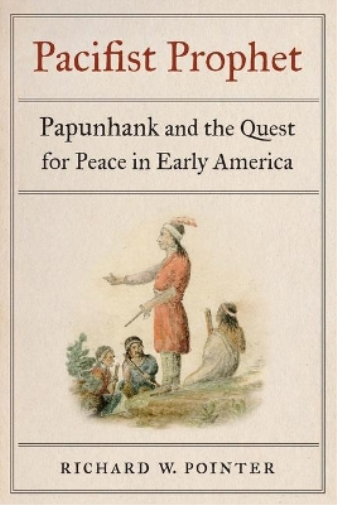

Pacifist Prophet
Couldn't load pickup availability
Collapsible content
DESCRIPTION
Papunhank and the Quest for Peace in Early America. Pacifist Prophet recounts the untold history of peaceable Native Americans in the eighteenth century as explored through the world of Papunhank (ca. 1705–75), a Munsee and Moravian prophet, preacher, reformer, and diplomat in Pennsylvania and the Ohio country.
. Pacifist Prophet recounts the untold history of peaceable Native Americans in the eighteenth century, as explored through the world of Papunhank (ca. 1705–75), a Munsee and Moravian prophet, preacher, reformer, and diplomat. Papunhank’s life was dominated by a search for a peaceful homeland in Pennsylvania and the Ohio country amid the upheavals of the era between the Seven Years’ War and the American Revolution.
His efforts paralleled other Indian quests for autonomy but with a crucial twist: he was a pacifist committed to using only nonviolent means. Such an approach countered the messages of other Native prophets and ran against the tide in an early American world increasingly wrecked with violence, racial hatred, and political turmoil. Nevertheless, Papunhank was not alone. He followed and contributed to a longer and wider indigenous peace tradition.
Richard W. Pointer shows how Papunhank pushed beyond the pragmatic pacifism of other Indians and developed from indigenous and Christian influences a principled pacifism that became the driving force of his life and leadership. Hundreds of Native people embraced his call to be “a great Lover of Peace” in their quests for home. Against formidable odds, Papunhank’s prophetic message spoke boldly to Euro-American and Native centers of power and kept many Indians alive during a time when their very survival was constantly threatened. Papunhank’s story sheds critical new light on the responses of some Munsees, Delawares, Mahicans, Nanticokes, and Conoys for whom the “way of war” was no way at all.
DELIVERY & RETURNS
UK Delivery:
- Free delivery on all orders of £10 or more.
- £1.49 delivery fee on orders below £10.
- UK orders are shipped via Royal Mail 2nd Class.
International Delivery:
- Flat rate delivery charges vary by country.
Dispatch and Delivery Times:
- All orders are shipped from our warehouse in Northampton, UK as soon as stock is available.
- UK mainland orders typically arrive within 3-7 working days via Royal Mail 2nd Class.
- International estimated delivery times:
- Europe & Channel Islands: 7 to 10 working days
- USA: 7 to 15 working days
- Rest of the World: 9 to 30 working days
View our full delivery infomation here.
-
OVER
2 MILLION PRODUCTS
-
60 MILLION CUSTOMERS
ACROSS 190 COUNTRIES
You might also like
Loading recommendations...