

Winter in America
Winter in America
A Cultural History of Neoliberalism, from the Sixties to the Reagan Revolution
Paperback
Couldn't load pickup availability
Join our rewards scheme and earn reward points on this purchase!
Earn points on this!
Sign in or Sign up!- Release Date: 08/11/2021
- Barcode: 9781469664682
- Genre: Non-Fiction
- Sub-Genre: Society & Culture
- Imprint: University of North Carolina Press
- Publisher: The University of North Carolina Press
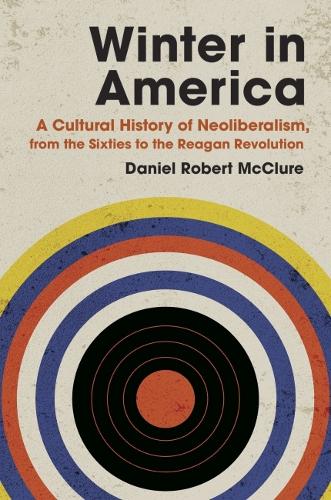

Winter in America
Couldn't load pickup availability
Collapsible content
DESCRIPTION
A Cultural History of Neoliberalism, from the Sixties to the Reagan Revolution
Explores the interaction between culture and economics during the transition from Keynesianism in the mid-1960s to the triumph of neoliberalism in the 1980s. Daniel Robert McClure tracks the perception that a great neoliberal reckoning might restore America's repressive racial, sexual, gendered, and classed foundations in the wake of the 1960s.
Neoliberalism took shape in the 1930s and 1940s as a transnational political philosophy and system of economic, political, and cultural relations. Resting on the fundamental premise that the free market should be unfettered by government intrusion, neoliberal policies have primarily redirected the state's prerogatives away from the postwar Keynesian welfare system and toward the insulation of finance and corporate America from democratic pressure. As neoliberal ideas gained political currency in the 1960s and 1970s, a reactionary cultural turn catalyzed their ascension. The cinema, music, magazine culture, and current events discourse of the 1970s provided the space of negotiation permitting these ideas to take hold and be challenged.
Daniel Robert McClure's book follows the interaction between culture and economics during the transition from Keynesianism in the mid-1960s to the triumph of neoliberalism at the dawn of the 1980s. From the 1965 debate between William F. Buckley and James Baldwin, through the pages of BusinessWeek and Playboy, to the rise of exploitation cinema in the 1970s, McClure tracks the increasingly shared perception by white males that they had "lost" their long-standing rights and that a great neoliberal reckoning might restore America's repressive racial, sexual, gendered, and classed foundations in the wake of the 1960s.
DELIVERY & RETURNS
UK Delivery:
- Free delivery on all orders of £10 or more.
- £1.49 delivery fee on orders below £10.
- UK orders are shipped via Royal Mail 2nd Class.
International Delivery:
- Flat rate delivery charges vary by country.
Dispatch and Delivery Times:
- All orders are shipped from our warehouse in Northampton, UK within 48 hours of receipt during working hours.
- UK mainland orders typically arrive within 3-5 working days via Royal Mail 2nd Class.
- International estimated delivery times:
- Europe & Channel Islands: 7 to 10 working days
- USA: 7 to 15 working days
- Rest of the World: 9 to 21 working days
View our full delivery infomation here.
-
OVER
2 MILLION PRODUCTS
-
60 MILLION CUSTOMERS
ACROSS 190 COUNTRIES
You might also like
Loading recommendations...