

How the Body Shapes Knowledge
How the Body Shapes Knowledge
Empirical Support for Embodied Cognition
Paperback
Couldn't load pickup availability
Join our rewards scheme and earn reward points on this purchase!
Earn points on this!
Sign in or Sign up!- Release Date: 12/03/2019
- Barcode: 9781433829604
- Imprint: American Psychological Association
- Publisher: American Psychological Association
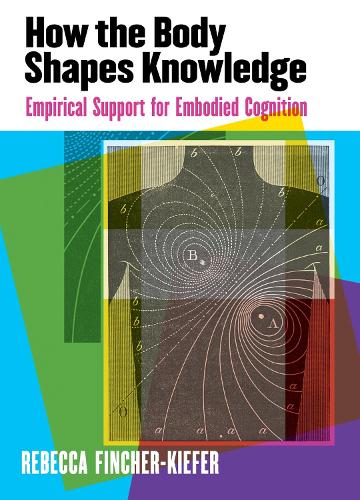

How the Body Shapes Knowledge
Couldn't load pickup availability
Collapsible content
DESCRIPTION
Empirical Support for Embodied Cognition
Exploring how physical sensations shape our mental processes, the research investigates embodied cognition and its ties to neural pathways activated during real experiences. Behavioral experiments and neuroscience findings reveal the intricate connection between bodily states, memories, and emotional reasoning.
If you are leaning backwards in your chair, are you more likely to think about the past than the future? When you say that someone amp ldquo leaves me cold, amp rdquo do you literally feel cold? What role does the body play in our perceptions of the world? Is the mind a calculating machine, or are our thoughts and emotions amp ldquo grounded amp rdquo in specific, felt, bodily experience?
Questions like these have long driven research in embodied cognition, a theory of mental functioning that has gained increasing prominence in recent decades. This book explores embodied cognition from an experimental psychology perspective. Author Rebecca-Fincher Kiefer examines a wealth of evidence, including behavioral studies supported by neuroscientific findings, that suggest that our knowledge of the world is represented, or grounded, in the neural pathways that were used when we initially experienced those concepts. A amp ldquo reuse amp rdquo of these same neural pathways, according to embodiment theory, is therefore what constitutes thinking.
With compelling descriptions and an investigative spirit, this book is essential reading for graduate and undergraduate students, and anyone seeking to understand the past, present, and future of human cognition.
DELIVERY & RETURNS
UK Delivery:
- Free delivery on all orders of £10 or more.
- £1.49 delivery fee on orders below £10.
- UK orders are shipped via Royal Mail 2nd Class.
International Delivery:
- Flat rate delivery charges vary by country.
Dispatch and Delivery Times:
- All orders are shipped from our warehouse in Northampton, UK as soon as stock is available.
- UK mainland orders typically arrive within 3-7 working days via Royal Mail 2nd Class.
- International estimated delivery times:
- Europe & Channel Islands: 7 to 10 working days
- USA: 7 to 15 working days
- Rest of the World: 9 to 30 working days
View our full delivery infomation here.
-
OVER
2 MILLION PRODUCTS
-
60 MILLION CUSTOMERS
ACROSS 190 COUNTRIES
You might also like
Loading recommendations...