

Revising Reality
Revising Reality
How Sequels, Remakes, Retcons, and Rejects Explain the World
Paperback
Couldn't load pickup availability
Join our rewards scheme and earn reward points on this purchase!
Earn points on this!
Sign in or Sign up!- Release Date: 30/05/2024
- Barcode: 9781350439627
- Genre: Non-Fiction
- Sub-Genre: Society & Culture
- Imprint: Bloomsbury Academic
- Publisher: Bloomsbury Publishing
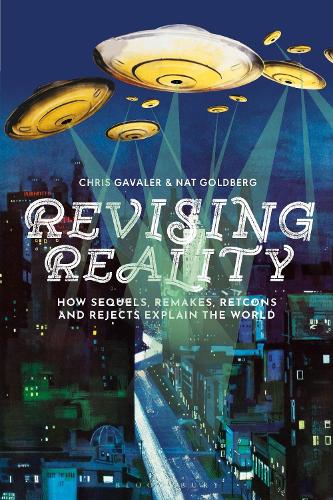

Revising Reality
Couldn't load pickup availability
Collapsible content
DESCRIPTION
How Sequels, Remakes, Retcons, and Rejects Explain the World The past is fixed – what happened happened. But our descriptions of that past are in constant flux, creating branching networks of contradictory accounts more complex than any fictional franchise. Revising Reality uses pop culture and media concepts of revision to untangle our real-world histories – with startlingly revelatory results.
Novels, comics, films, and TV shows can continue previous events (sequels), reinterpret events (retcons), or restart events (remakes), and audiences can ignore any of these revisions (rejects). Drawing on these four kinds of revision derived from franchises such as Star Wars, Harry Potter, The Lord of the Rings, and Marvel comics, Chris Gavaler and Nat Goldberg make sense of the stories we tell about a remarkable range of actual events, including scientific discoveries, Supreme Court cases, historical moments, folk heroes, and even trans names and human memory.
They ask: –
What happened to the original, green-scaled dinosaurs after scientists decided dinosaurs had multi-colored feathers?
When overturning Roe v. Wade, did the Supreme Court end the right to abortion, or did the Court claim that the right of the previous half century never existed?
Since Ronald Reagan increased taxes, expanded government, and championed amnesty for undocumented immigrants, who is the Ronald Reagan whom today’s conservatives champion as a model president?
When a trans person comes out as trans, has their gender changed or has their gender remained consistent?
Are our memories accounts of real events or some kind (or kinds) of revision? And if our memories are in flux, what does that say about our memory-dependent identities?
Revising Reality answers these and so many more questions, providing surprising new tools for explaining the world and our relationship to it.
DELIVERY & RETURNS
UK Delivery:
- Free delivery on all orders of £10 or more.
- £1.49 delivery fee on orders below £10.
- UK orders are shipped via Royal Mail 2nd Class.
International Delivery:
- Flat rate delivery charges vary by country.
Dispatch and Delivery Times:
- All orders are shipped from our warehouse in Northampton, UK within 48 hours of receipt during working hours.
- UK mainland orders typically arrive within 3-5 working days via Royal Mail 2nd Class.
- International estimated delivery times:
- Europe & Channel Islands: 7 to 10 working days
- USA: 7 to 15 working days
- Rest of the World: 9 to 21 working days
View our full delivery infomation here.
-
OVER
2 MILLION PRODUCTS
-
60 MILLION CUSTOMERS
ACROSS 190 COUNTRIES
You might also like
Loading recommendations...