

A New Economic Anthropology
A New Economic Anthropology
Hardback
Couldn't load pickup availability
Join our rewards scheme and earn reward points on this purchase!
Earn points on this!
Sign in or Sign up!- Release Date: 10/03/2023
- Barcode: 9781032479620
- Genre: Business & Finance
- Subgenre: Society & Culture
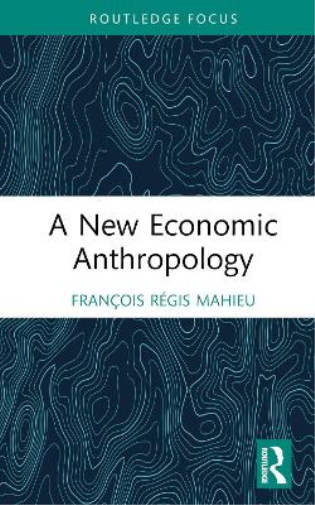

A New Economic Anthropology
Couldn't load pickup availability
Collapsible content
DESCRIPTION
Traditionally economic anthropology has been studied by sociologists, anthropologists and philosophers. However, anthropological questions have remained largely untreated in economics. This book argues for a new economic anthropology which goes beyond the conflict of economics and anthropology to show the complementarity of the approaches. Traditionally economic anthropology has been studied by sociologists, anthropologists, and philosophers seeking to highlight the social foundations of economic action. Meanwhile, anthropological questions have remained largely untreated in economics, despite the prominence given to the individual in microeconomics. And there is very little in the way of dialogue between the two sides. This book argues for a new economic anthropology which goes beyond the conflict of economics and anthropology to show the complementarity of the two approaches. Economics needs to go beyond the stage of homo oeconomicus and be open to broader ideas about the person. Equally, anthropology can be enriched through the methods and models of economic theory. This new economic anthropology goes beyond a simple observation of societies. It is new because it introduces the responsible person with a wider range of characteristics, in particular vulnerability and suffering, as a subject of economics. It is a particular interpretation of economic anthropology calling for a broadening of the subject (moving from the individual to the person), range of values (admission of negative values for altruism, social capital, responsibility), and disciplinary references. Through this approach, both economics and anthropology can be enriched. This book will be of great interest to those working in the fields of economics, anthropology, philosophy, and development studies.
DELIVERY & RETURNS
UK Delivery:
- Free delivery on all orders of £10 or more.
- £1.49 delivery fee on orders below £10.
- UK orders are shipped via Royal Mail 2nd Class.
International Delivery:
- Flat rate delivery charges vary by country.
Dispatch and Delivery Times:
- All orders are shipped from our warehouse in Northampton, UK within 48 hours of receipt during working hours.
- UK mainland orders typically arrive within 3-5 working days via Royal Mail 2nd Class.
- International estimated delivery times:
- Europe & Channel Islands: 7 to 10 working days
- USA: 7 to 15 working days
- Rest of the World: 9 to 21 working days
View our full delivery infomation here.
-
OVER
2 MILLION PRODUCTS
-
60 MILLION CUSTOMERS
ACROSS 190 COUNTRIES
You might also like
Loading recommendations...