


What Does ‘Art’ Mean Now?
What Does ‘Art’ Mean Now?
Paperback
Couldn't load pickup availability
Join our rewards scheme and earn reward points on this purchase!
Earn points on this!
Sign in or Sign up!- Release Date: 22/06/2023
- Barcode: 9781032446837
- Genre: Philosophy & Spirituality
- Subgenre: Arts & Photography

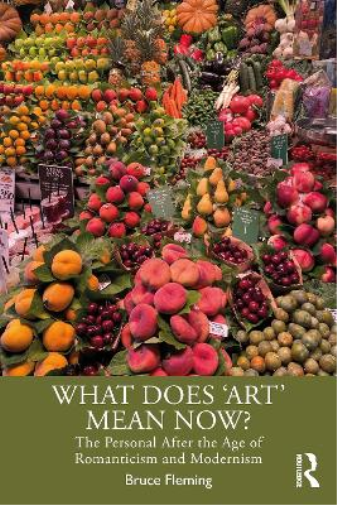

What Does ‘Art’ Mean Now?
Couldn't load pickup availability
Collapsible content
DESCRIPTION
The Personal After the Age of Romanticism and Modernism. This book explores the meaning of art in contemporary society, adopting a subjectivist approach to aesthetic experience now that art is no longer treated as a separate sphere of activity, to be confined to institutions such as the academy or museums as in the Modern Age. What Does ‘Art’ Mean Now? asks, and answers, fundamental questions about the nature of aesthetic experience and role of the arts in contemporary society. The Modern Age, Romanticism and beyond, viewed art as something transcending and separated from life, and usually something encountered in museums or classrooms. Nowadays, however, art tends to be defined not by a commonly agreed-upon standard of “quality” or by its forms, such as painting and sculpture, but instead by political and ideological criteria. So how do we connect with the works in museums whose point was precisely that they stood apart from such considerations? Can we and should we be educated to “appreciate” art—and what does it do for us anyway? What are we to make of the so-different newer works—installations, performances, excerpts from the world—held to be art that increasingly make it into museums? Adopting a subjectivist approach, this book argues that in the absence of a universal judgment or standard of taste, the experience of art is one of freedom. The arts give us the means to conceptualize our lives, showing us ourselves as we are and as we might wish—or not wish—to be, as well as where we have been and where we are going. It will appeal to scholars of sociology, philosophy, museum studies, and art history, and to anyone interested in, or puzzled by, museums or college courses and their presentation of art today.
DELIVERY & RETURNS
UK Delivery:
- Free delivery on all orders of £10 or more.
- £1.49 delivery fee on orders below £10.
- UK orders are shipped via Royal Mail 2nd Class.
International Delivery:
- Flat rate delivery charges vary by country.
Dispatch and Delivery Times:
- All orders are shipped from our warehouse in Northampton, UK within 48 hours of receipt during working hours.
- UK mainland orders typically arrive within 3-5 working days via Royal Mail 2nd Class.
- International estimated delivery times:
- Europe & Channel Islands: 7 to 10 working days
- USA: 7 to 15 working days
- Rest of the World: 9 to 21 working days
View our full delivery infomation here.
-
OVER
2 MILLION PRODUCTS
-
60 MILLION CUSTOMERS
ACROSS 190 COUNTRIES
You might also like
Loading recommendations...