

Competence, Conduct, and Billion Dollar Consequences
Competence, Conduct, and Billion Dollar Consequences
Paperback
Couldn't load pickup availability
Join our rewards scheme and earn 165 reward points on this purchase!
Earn 165 points on this!
Sign in or Sign up!- Release Date: 21/02/2023
- Barcode: 9781032286761
- Genre: Business & Finance
- Label: Routledge
- Publisher: Taylor & Francis Ltd
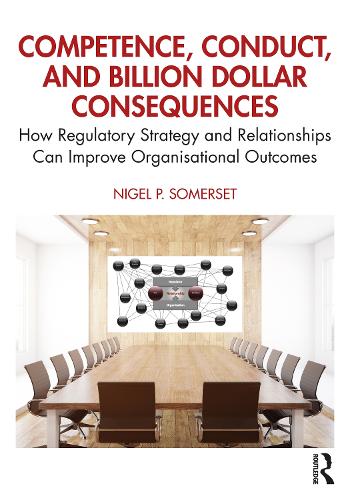

Competence, Conduct, and Billion Dollar Consequences
Couldn't load pickup availability
Collapsible content
DESCRIPTION
How Regulatory Strategy and Relationships Can Improve Organisational Outcomes. This practical guide to understanding how regulators build insight and form judgements will help organisations to develop their strategy and approach to engagement, and to improve their regulatory outcomes.This book is written for those who wish to build positive and progressive relationships with their regulators. This practical guide to understanding how regulators build insight and form judgements will help organisations to develop their strategy and approach to engagement and to improve their regulatory outcomes. From fintech and regtech,robot-assisted surgery and advances in stem cell technology, the explosion in use of social media and advances in computing power and AI to the development of autonomous vehicles and digital environments such as the metaverse, these exciting developments present questions, invite debate and have implications. These rapid new developments also join a world described as being increasingly VUCA (volatile, uncertain, complex, and ambiguous), making industry-regulator relationships more important than ever to prevent consumer harm and to configure business success. This book is written for those who wish to build positive and progressive relationships with their regulators in these exciting times of rapid advancement. From developing their strategy, through to the practicalities of how to prepare and engage with regulators, readers are navigated through an ecosystem of insight to help build an understanding of what informs their regulator’s opinion and judgements. Underpinned with real-world experiences and examples, this book shows that, through clearer strategic focus and more effective relationships, organisations can refine their approach and build their relationships to drive mutually beneficial regulatory relationships that avoid negative consequences and unnecessary costs. Board members, executives, senior leaders, risk, compliance, legal professionals, regulators, and students of business, finance, and law will refer to this book again and again to guide holistic thinking about regulatory relationships and use the insights these can provide to help them calibrate their actions, activities, and progress.
DELIVERY & RETURNS
UK Delivery:
- Free delivery on all orders of £10 or more.
- £1.49 delivery fee on orders below £10.
- UK orders are shipped via Royal Mail 2nd Class.
International Delivery:
- Flat rate delivery charges vary by country.
Dispatch and Delivery Times:
- All orders are shipped from our warehouse in Northampton, UK within 48 hours of receipt during working hours.
- UK mainland orders typically arrive within 3-5 working days via Royal Mail 2nd Class.
- International estimated delivery times:
- Europe & Channel Islands: 7 to 10 working days
- USA: 7 to 15 working days
- Rest of the World: 9 to 21 working days
View our full delivery infomation here.
-
OVER
2 MILLION PRODUCTS
-
60 MILLION CUSTOMERS
ACROSS 190 COUNTRIES
You might also like
Loading recommendations...