

Making Schools Better for Disadvantaged Students
Making Schools Better for Disadvantaged Students
The International Implications of Evidence on Effective School Funding
Hardback
Couldn't load pickup availability
Join our rewards scheme and earn reward points on this purchase!
Earn points on this!
Sign in or Sign up!- Release Date: 25/11/2022
- Barcode: 9781032231372
- Imprint: Routledge
- Publisher: Taylor & Francis
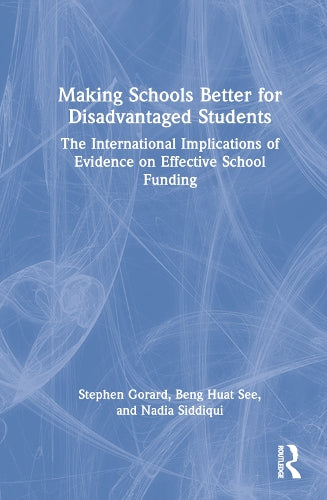

Making Schools Better for Disadvantaged Students
Couldn't load pickup availability
Collapsible content
DESCRIPTION
The International Implications of Evidence on Effective School Funding Making Schools Better for Disadvantaged Students presents detailed research into how poverty affects student segregation and underachievement in schools. It contains the first ever large-scale evaluation of how funding can best be used to lower the poverty attainment gap for disadvantaged students. *2023 BERA Educational Research Book of the Year* Around the world, governments, charities, and other bodies are concerned with improving education, especially for the lowest-attaining and most disadvantaged students. Making Schools Better for Disadvantaged Students presents detailed research into how poverty affects student segregation and underachievement in schools. It contains the first ever large-scale evaluation of how funding can best be used to lower the poverty attainment gap for disadvantaged students. Drawing on a wealth of empirical research from England, India, and Pakistan as well as worldwide reviews of relevant studies, the book presents high-quality evidence on the impact of funding policy initiatives, such as the Pupil Premium funding in England, and the many variations of similar schemes worldwide. It analyses education measures which have been put in place and discusses ways in which these can be used efficiently and fairly to allocate funding to students who are persistently at risk of underachievement. The book is unique in synthesising many forms of evidence from around the world and finding a definition of educational disadvantage that can be used fairly across different contexts. Offering significant implications for ways to improve educational outcomes for disadvantaged students, the book will be essential reading for students of education policy, sociology of education and educational practices, and all researchers, school leaders, and policy-makers working in this area.
DELIVERY & RETURNS
UK Delivery:
- Free delivery on all orders of £10 or more.
- £1.49 delivery fee on orders below £10.
- UK orders are shipped via Royal Mail 2nd Class.
International Delivery:
- Flat rate delivery charges vary by country.
Dispatch and Delivery Times:
- All orders are shipped from our warehouse in Northampton, UK within 48 hours of receipt during working hours.
- UK mainland orders typically arrive within 3-5 working days via Royal Mail 2nd Class.
- International estimated delivery times:
- Europe & Channel Islands: 7 to 10 working days
- USA: 7 to 15 working days
- Rest of the World: 9 to 21 working days
View our full delivery infomation here.
-
OVER
2 MILLION PRODUCTS
-
60 MILLION CUSTOMERS
ACROSS 190 COUNTRIES
You might also like
Loading recommendations...