

Selections from Three Works
Selections from Three Works
A Treatise on Laws and God the Lawgiver/A Defence of the Catholic and Apostolic Faith/A Work on the Three Theological Virtues: Faith, Hope and Charity
Hardback
Couldn't load pickup availability
Join our rewards scheme and earn reward points on this purchase!
Earn points on this!
Sign in or Sign up!- Release Date: 30/04/2015
- Barcode: 9780865975163
- Genre: Philosophy & Spirituality
- Sub-Genre: Theology
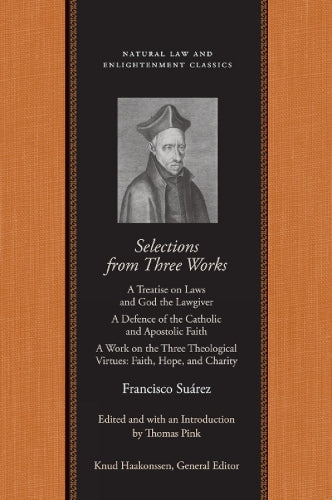

Selections from Three Works
Couldn't load pickup availability
Collapsible content
DESCRIPTION
A Treatise on Laws and God the Lawgiver/A Defence of the Catholic and Apostolic Faith/A Work on the Three Theological Virtues: Faith, Hope and Charity
Francisco Suarez was a principal figure in the transition from scholastic to modern natural law. This work presents a selection of translations from "On the Laws and God the Law-Giver (De legibus ac Deo legislatore, 1612)". It shows how both human reason and the command of the lawgiver dictate the moral space of human action.
Francisco Suárez was a principal figure in the transition from scholastic to modern natural law, summing up a long and rich tradition and providing much material both for adoption and controversy in the seventeenth century and beyond. Most of the selections translated in this volume are from 'On the Laws and God the Law-Giver (De legibus ac Deo legislatore, 1612)', a work that is considered one of Suárez' greatest achievements. Working within the framework originally elaborated by Thomas Aquinas, Suárez treated humanity as the subject of four different laws, which together guide human beings toward the ends of which they are capable. Suárez achieved a double objective in his systematic account of moral activity. First, he examined and synthesized the entire scholastic heritage of thinking on this topic, identifying the key issues of debate and the key authors who had formulated the different positions most incisively. Second, he went beyond this heritage of authorities to present a new account of human moral action and its relationship to the law. Treading a fine line between those to whom moral directives are purely a matter of reason and those to whom they are purely a matter of a commanding will, Suárez attempted to show how both human reason and the command of the lawgiver dictate the moral space of human action.
ADDITIONAL DETAILS
DELIVERY & RETURNS
UK Delivery:
- Free delivery on all orders of £10 or more.
- £1.49 delivery fee on orders below £10.
- UK orders are shipped via Royal Mail 2nd Class.
International Delivery:
- Flat rate delivery charges vary by country.
Dispatch and Delivery Times:
- All orders are shipped from our warehouse in Northampton, UK within 48 hours of receipt during working hours.
- UK mainland orders typically arrive within 3-5 working days via Royal Mail 2nd Class.
- International estimated delivery times:
- Europe & Channel Islands: 7 to 10 working days
- USA: 7 to 15 working days
- Rest of the World: 9 to 21 working days
View our full delivery infomation here.
-
OVER
2 MILLION PRODUCTS
-
60 MILLION CUSTOMERS
ACROSS 190 COUNTRIES
You might also like
Loading recommendations...