

Colonization and Its Discontents
Colonization and Its Discontents
Paperback
Couldn't load pickup availability
Join our rewards scheme and earn reward points on this purchase!
Earn points on this!
Sign in or Sign up!- Release Date: 24/09/2012
- Barcode: 9780814764534
- Genre: History
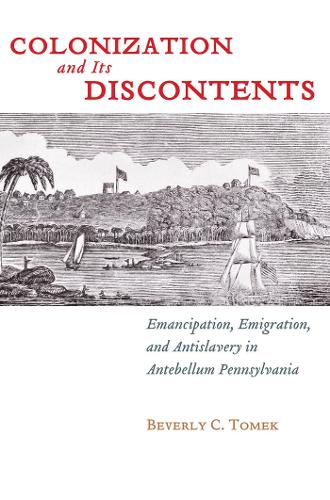

Colonization and Its Discontents
Couldn't load pickup availability
Collapsible content
DESCRIPTION
Emancipation, Emigration, and Antislavery in Antebellum Pennsylvania Pennsylvania contained the largest concentration of early America’s abolitionist leaders and organizations, making it a necessary and illustrative stage from which to understand how national conversations about the place of free blacks in early America originated and evolved, and, importantly, the role that colonization—supporting the emigration of free and emancipated blacks to Africa—played in national and international antislavery movements. Beverly C. Tomek’s meticulous exploration of the archives of the American Colonization Society, Pennsylvania’s abolitionist societies, and colonizationist leaders (both black and white) enables her to boldly and innovatively demonstrate that, in Philadelphia at least, the American Colonization Society often worked closely with other antislavery groups to further the goals of the abolitionist movement.
Examination of the complexity of the colonization movement, describing the difference between those who supported colonization for political and social reasons and those who supported it for religious and humanitarian reasons
In Colonization and Its Discontents, Tomek brings a much-needed examination of the complexity of the colonization movement by describing in depth the difference between those who supported colonization for political and social reasons and those who supported it for religious and humanitarian reasons. Finally, she puts the black perspective on emigration into the broader picture instead of treating black nationalism as an isolated phenomenon and examines its role in influencing the black abolitionist agenda.
DELIVERY & RETURNS
UK Delivery:
- Free delivery on all orders of £10 or more.
- £1.49 delivery fee on orders below £10.
- UK orders are shipped via Royal Mail 2nd Class.
International Delivery:
- Flat rate delivery charges vary by country.
Dispatch and Delivery Times:
- All orders are shipped from our warehouse in Northampton, UK within 48 hours of receipt during working hours.
- UK mainland orders typically arrive within 3-5 working days via Royal Mail 2nd Class.
- International estimated delivery times:
- Europe & Channel Islands: 7 to 10 working days
- USA: 7 to 15 working days
- Rest of the World: 9 to 21 working days
View our full delivery infomation here.
-
OVER
2 MILLION PRODUCTS
-
60 MILLION CUSTOMERS
ACROSS 190 COUNTRIES
You might also like
Loading recommendations...