

Rhetorical Education in Turn-of-the-Century U.S. Women's Journalism
Rhetorical Education in Turn-of-the-Century U.S. Women's Journalism
Paperback
Couldn't load pickup availability
Join our rewards scheme and earn reward points on this purchase!
Earn points on this!
Sign in or Sign up!- Release Date: 27/11/2023
- Barcode: 9780809338672
- Genre: Society & Culture
- Sub-Genre: Gender Sex & Relationships
- Imprint: Southern Illinois University Press
- Publisher: Southern Illinois University Press
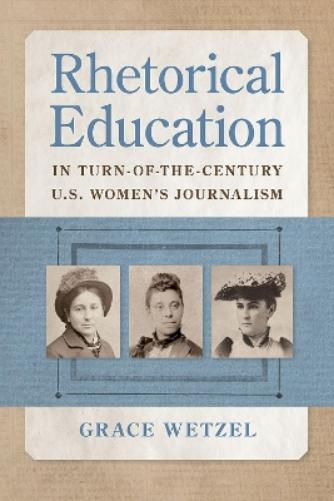

Rhetorical Education in Turn-of-the-Century U.S. Women's Journalism
Couldn't load pickup availability
Collapsible content
DESCRIPTION
Illuminates the pedagogical contributions of three newspaperwomen to show how the field became a dynamic site of public participation, relationship building, education, and activism in the 1880s and 1890s.
Examining the rhetorical and pedagogical workof three turn-of-the-century newspaperwomen
At the end of the nineteenth century, newspapers powerfully shaped the U.S. reading public, fostering widespread literacy development and facilitating rhetorical education. With new opportunities to engage audiences, female journalists repurposed the masculine tradition of journalistic writing by bringing together intimate forms of rhetoric and pedagogy to create innovative new dialogues. Rhetorical Education in Turn-of-the-Century U.S. Women’s Journalism illuminates the pedagogical contributions of three newspaperwomen to show how the field became a dynamic site of public participation, relationship building, education, and activism in the 1880s and 1890s.
Grace Wetzel introduces us to the work of Omaha correspondent Susette La Flesche Tibbles (Inshata Theumba), African American newspaper columnist Gertrude Bustill Mossell, and white middle-class reporter Winifred Black (“Annie Laurie”). Journalists by trade, these three writers made the mass-circulating newspaper their site of teaching and social action, inviting their audiences and communities—especially systematically marginalized voices—to speak, write, and teach alongside them.
Situating these journalists within their own specific writing contexts and personas, Wetzel reveals how Mossell promoted literary learning and community investment among African American women through a reader-centered pedagogy; La Flesche modeled relational news research and reporting as a survivance practice while reporting for the Omaha Morning World-Herald at the time of the Wounded Knee Massacre; and Black inspired public writing and activism among children from different socioeconomic classes through her “Little Jim” story. The teachings of these figures serve as enduring examples of how we can engage in meaningful public literacy and ethical journalism.
ADDITIONAL DETAILS
DELIVERY & RETURNS
UK Delivery:
- Free delivery on all orders of £10 or more.
- £1.49 delivery fee on orders below £10.
- UK orders are shipped via Royal Mail 2nd Class.
International Delivery:
- Flat rate delivery charges vary by country.
Dispatch and Delivery Times:
- All orders are shipped from our warehouse in Northampton, UK as soon as stock is available.
- UK mainland orders typically arrive within 3-7 working days via Royal Mail 2nd Class.
- International estimated delivery times:
- Europe & Channel Islands: 7 to 10 working days
- USA: 7 to 15 working days
- Rest of the World: 9 to 30 working days
View our full delivery infomation here.
-
OVER
2 MILLION PRODUCTS
-
60 MILLION CUSTOMERS
ACROSS 190 COUNTRIES
You might also like
Loading recommendations...