

Sins of Excess
Sins of Excess
The Spatial Politics of Idolatry and Magic in Colonial Mexico
Hardback
Couldn't load pickup availability
Join our rewards scheme and earn reward points on this purchase!
Earn points on this!
Sign in or Sign up!- Release Date: 22/07/2025
- Barcode: 9780806195636
- Genre: History
- Sub-Genre: History of the Americas
- Imprint: University of Oklahoma Press
- Publisher: University of Oklahoma Press
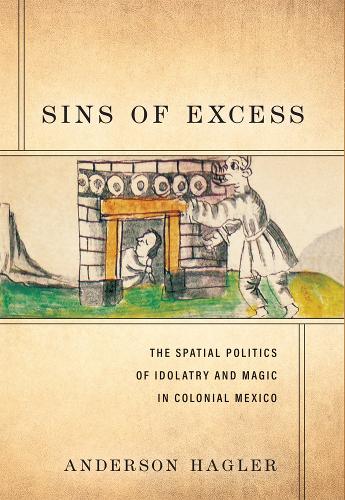

Sins of Excess
Couldn't load pickup availability
Collapsible content
DESCRIPTION
The Spatial Politics of Idolatry and Magic in Colonial Mexico
For the Spanish colonizers of Mexico in the sixteenth century, the concept of 'excess' - even the word itself - covered a multitude of sins, including idolatry and magic. In Sins of Excess, Anderson Hagler uses the language of excess as a lens for examining how the colonizers of New Spain conflated cultural diversity into a superficially - and usefully - homogeneous whole under the pejorative umbrella of excess in its many forms. In this way, Hagler suggests, deploying excess and its derivatives influenced how Spanish colonists came to view the practices of the Indigenous population.
In the viceroyalty of New Spain descriptive terms such as 'harms and excesses' (dañ os y excesos) not only referred to crimes like murder and robbery (muertes y robos) but also became generalized to refer to Native religious, social, or cultural practices that fell outside the boundaries of Catholic orthodoxy. A reading of royal decrees and ecclesiastical missives, commoner testimony from criminal cases, and the trials of the Mexican Inquisition reveals a calculated rhetorical strategy that gathered non-European social-cultural experiences into a negative category. Consequently, 'excess' provides an analytical framework for understanding how colonial officials interacted with Indigenous peoples and those of African descent as they attempted to impose social order.
While primary sources in non-European languages such as Nahuatl reveal a similar preoccupation with excess, Hagler reveals in this insightful book how incongruities between Nahua and Spanish interpretations of the term extended through the colonial era and generated increasing conflict.
DELIVERY & RETURNS
UK Delivery:
- Free delivery on all orders of £10 or more.
- £1.49 delivery fee on orders below £10.
- UK orders are shipped via Royal Mail 2nd Class.
International Delivery:
- Flat rate delivery charges vary by country.
Dispatch and Delivery Times:
- All orders are shipped from our warehouse in Northampton, UK as soon as stock is available.
- UK mainland orders typically arrive within 3-7 working days via Royal Mail 2nd Class.
- International estimated delivery times:
- Europe & Channel Islands: 7 to 10 working days
- USA: 7 to 15 working days
- Rest of the World: 9 to 30 working days
View our full delivery infomation here.
-
OVER
2 MILLION PRODUCTS
-
60 MILLION CUSTOMERS
ACROSS 190 COUNTRIES
You might also like
Loading recommendations...