

Nahuatl Theater
Nahuatl Theater
Paperback
Couldn't load pickup availability
Join our rewards scheme and earn reward points on this purchase!
Earn points on this!
Sign in or Sign up!- Release Date: 28/03/2023
- Barcode: 9780806192161
- Genre: Literary Criticism
- Subgenre: Social Sciences
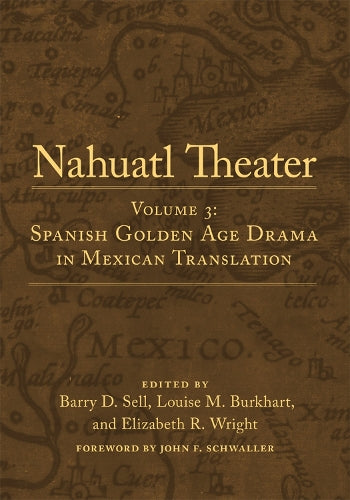

Nahuatl Theater
Couldn't load pickup availability
Collapsible content
DESCRIPTION
Volume 3: Spanish Golden Age Drama in Mexican Translation Nahuatl Theater, Volume 3 presents for the first time in English the complete dramatic works of Alva, the only known plays from Spain’s Golden Age adapted into the lively world of Nahuatl-language theater. Alva’s translations—“The Great Theater of the World,” “The Animal Prophet and the Fortunate Patricide,” “The Mother of the Best,” and a farcical intermezzo—represent ambitious attempts to add complex, Baroque dramatic pieces by such literary giants as Lope de Vega and Pedro CalderÓn de la Barca to the repertory of Nahuatl theater, otherwise dominated by sober one-act religious plays grounded in medieval tradition. The Spanish sources and Alva’s Nahuatl, set on facing pages with their English translations, show how Alva “Mexicanized” the plays by incorporating Nahuatl linguistic conventions and referencing local symbolism and social life. In their introductory essays, the editors offer contextual and interpretive information that provides an entrÉe into this rich material. As the only known adaptations of these theatrical works into a Native American language, these plays stand as fine literature in their own right.
Presents for the first time in English the complete dramatic works of Don Bartolome de Alva, the only known plays from Spain’s Golden Age adapted into the lively world of Nahuatl-language theatre.
Don BartolomÉ de Alva was a mestizo who rose within New Spain’s ecclesiastical hierarchy when people of indigenous heritage were routinely excluded from the priesthood. In 1640 and 1641 he translated several theatrical pieces from Spanish into Nahuatl, yet this prodigious accomplishment remained virtually unknown for centuries.
DELIVERY & RETURNS
UK Delivery:
- Free delivery on all orders of £10 or more.
- £1.49 delivery fee on orders below £10.
- UK orders are shipped via Royal Mail 2nd Class.
International Delivery:
- Flat rate delivery charges vary by country.
Dispatch and Delivery Times:
- All orders are shipped from our warehouse in Northampton, UK within 48 hours of receipt during working hours.
- UK mainland orders typically arrive within 3-5 working days via Royal Mail 2nd Class.
- International estimated delivery times:
- Europe & Channel Islands: 7 to 10 working days
- USA: 7 to 15 working days
- Rest of the World: 9 to 21 working days
View our full delivery infomation here.
-
OVER
2 MILLION PRODUCTS
-
60 MILLION CUSTOMERS
ACROSS 190 COUNTRIES
You might also like
Loading recommendations...