

Scottish Highlanders and Native Americans
Scottish Highlanders and Native Americans
Paperback
Couldn't load pickup availability
Join our rewards scheme and earn reward points on this purchase!
Earn points on this!
Sign in or Sign up!- Release Date: 04/04/2023
- Barcode: 9780806191959
- Genre: History
- Subgenre: Social Sciences
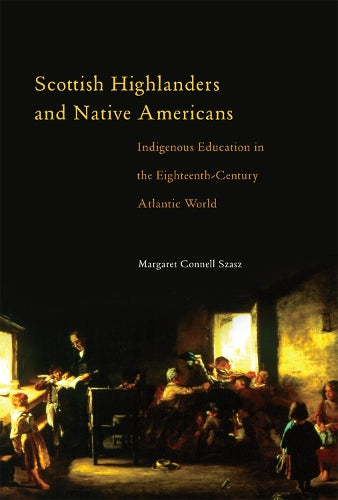

Scottish Highlanders and Native Americans
Couldn't load pickup availability
Collapsible content
DESCRIPTION
Indigenous Education in the Eighteenth-Century Atlantic World In this first book-length examination of the SSPCK, Margaret Connell Szasz explores the origins of the Scottish Society’s policies of cultural colonialism and their influence on two disparate frontiers. Drawing intriguing parallels between the treatment of Highland Scots and of Native Americans, she incorporates multiple perspectives on the cultural encounter, juxtaposing the attitudes of Highlanders and Lowlanders, English colonials and Native peoples, while giving voice to the Society’s pupils and graduates, its schoolmasters, and religious leaders. Featuring more than two dozen illustrations, Scottish Highlanders and Native Americans brims with intriguing comparisons and insights into two cultures on the cusp of modernity. It is a benchmark in emerging studies of comparative education and a major contribution to the growing literature of cross-cultural encounters.
In this first book-length examination of the Society in Scotland for the Propagation of Christian Knowledge, Margaret Connell Szasz explores the origins of the Scottish Society’s policies of cultural colonialism and their influence on two disparate frontiers.
The Society in Scotland for the Propagation of Christian Knowledge (SSPCK) was founded in 1709 by Scottish Lowlanders for the education of Highlanders: specifically to convert them from the Gaelic language to English, from the Episcopal faith to Presbyterianism, and from latent Jacobitism to loyalty to the crown. In a transatlantic translation of this effort, the “Scottish Society” also established itself in the New World to educate and assimilate Iroquois, Algonquin, and southeastern Native peoples.
DELIVERY & RETURNS
UK Delivery:
- Free delivery on all orders of £10 or more.
- £1.49 delivery fee on orders below £10.
- UK orders are shipped via Royal Mail 2nd Class.
International Delivery:
- Flat rate delivery charges vary by country.
Dispatch and Delivery Times:
- All orders are shipped from our warehouse in Northampton, UK within 48 hours of receipt during working hours.
- UK mainland orders typically arrive within 3-5 working days via Royal Mail 2nd Class.
- International estimated delivery times:
- Europe & Channel Islands: 7 to 10 working days
- USA: 7 to 15 working days
- Rest of the World: 9 to 21 working days
View our full delivery infomation here.
-
OVER
2 MILLION PRODUCTS
-
60 MILLION CUSTOMERS
ACROSS 190 COUNTRIES
You might also like
Loading recommendations...