

Where Two Worlds Met
Where Two Worlds Met
Paperback
Couldn't load pickup availability
Join our rewards scheme and earn reward points on this purchase!
Earn points on this!
Sign in or Sign up!- Release Date: 13/10/2006
- Barcode: 9780801473401
- Genre: Society & Culture
- Subgenre: Social Sciences
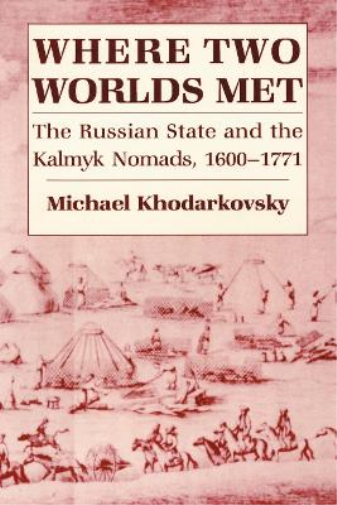

Where Two Worlds Met
Couldn't load pickup availability
Collapsible content
DESCRIPTION
The Russian State and the Kalmyk Nomads, 1600–1771. During the seventeenth and eighteenth centuries the expanding Russian empire was embroiled in a dramatic confrontation with the nomadic people known as the Kalmyks who had moved westward from Inner Asia onto the vast Caspian and Volga steppes. Drawing. During the seventeenth and eighteenth centuries the expanding Russian empire was embroiled in a dramatic confrontation with the nomadic people known as the Kalmyks who had moved westward from Inner Asia onto the vast Caspian and Volga steppes. Drawing on an unparalleled body of Russian and Turkish sources—including chronicles, epics, travelogues, and previously unstudied Ottoman archival materials—Michael Khodarkovsky offers a fresh interpretation of this long and destructive conflict, which ended with the unruly frontier becoming another province of the Russian empire.Khodarkovsky first sketches a cultural anthropology of the Kalmyk tribes, focusing on the assumptions they brought to the interactions with one another and with the sedentary cultures they encountered. In light of this portrait of Kalmyk culture and internal politics, Khodarkovsky rereads from the Kalmyk point of view the Russian history of disputes between the two peoples. Whenever possible, he compares Ottoman accounts of these events with the Russian sources on which earlier interpretations have been based. Khodarkovsky's analysis deepens our understanding of the history of Russian expansion and establishes a new paradigm for future study of the interaction between the Russians and the non-Russian peoples of Central Asia and Transcaucasia.
DELIVERY & RETURNS
UK Delivery:
- Free delivery on all orders of £10 or more.
- £1.49 delivery fee on orders below £10.
- UK orders are shipped via Royal Mail 2nd Class.
International Delivery:
- Flat rate delivery charges vary by country.
Dispatch and Delivery Times:
- All orders are shipped from our warehouse in Northampton, UK as soon as stock is available.
- UK mainland orders typically arrive within 3-7 working days via Royal Mail 2nd Class.
- International estimated delivery times:
- Europe & Channel Islands: 7 to 10 working days
- USA: 7 to 15 working days
- Rest of the World: 9 to 30 working days
View our full delivery infomation here.
-
OVER
2 MILLION PRODUCTS
-
60 MILLION CUSTOMERS
ACROSS 190 COUNTRIES
You might also like
Loading recommendations...