

Emerson and Self-Reliance
Emerson and Self-Reliance
Hardback
Couldn't load pickup availability
Join our rewards scheme and earn reward points on this purchase!
Earn points on this!
Sign in or Sign up!- Release Date: 09/04/2002
- Barcode: 9780742521445
- Genre: Philosophy & Spirituality
- Subgenre: Literary Criticism
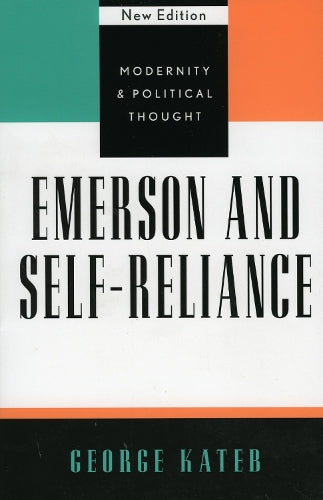

Emerson and Self-Reliance
Couldn't load pickup availability
Collapsible content
DESCRIPTION
One of Ralph Waldo Emerson's principle contributions to philosophy is the theory of self-reliance, a view of democratic individuality. George Kateb provides a reading of Emerson that is friendly to the interests of Nietzsche and to later Nietzscheans such as Weber, Heidegger, Arendt and Foucault.
Ralph Waldo Emerson was a great moral philosopher. One of his principle contributions is the theory of self-reliance, a view of democratic individuality. During much of his life, Emerson was considered a radical thinker, and his opposition to established religious opinion was scandalous. Emerson's deep commitment to individualism was at the root of his critique, and his articulation of individualism was constant, whether aimed against the group mind or against institutional constrictions. 'Nietzsche was Emerson's best reader,' and George Kateb provides an accessible reading of Emerson that is friendly to the interests of Nietzsche and to later Nietzscheans such as Weber, Heidegger, Arendt, and Foucault.
DELIVERY & RETURNS
UK Delivery:
- Free delivery on all orders of £10 or more.
- £1.49 delivery fee on orders below £10.
- UK orders are shipped via Royal Mail 2nd Class.
International Delivery:
- Flat rate delivery charges vary by country.
Dispatch and Delivery Times:
- All orders are shipped from our warehouse in Northampton, UK within 48 hours of receipt during working hours.
- UK mainland orders typically arrive within 3-5 working days via Royal Mail 2nd Class.
- International estimated delivery times:
- Europe & Channel Islands: 7 to 10 working days
- USA: 7 to 15 working days
- Rest of the World: 9 to 21 working days
View our full delivery infomation here.
-
OVER
2 MILLION PRODUCTS
-
60 MILLION CUSTOMERS
ACROSS 190 COUNTRIES
You might also like
Loading recommendations...