


Heathen
Heathen
Book
Couldn't load pickup availability
Join our rewards scheme and earn reward points on this purchase!
Earn points on this!
Sign in or Sign up!- Release Date: 17/05/2022
- Barcode: 9780674976771
- Genre: History
- Subgenre: Philosophy & Spirituality


Heathen
Couldn't load pickup availability
Collapsible content
DESCRIPTION
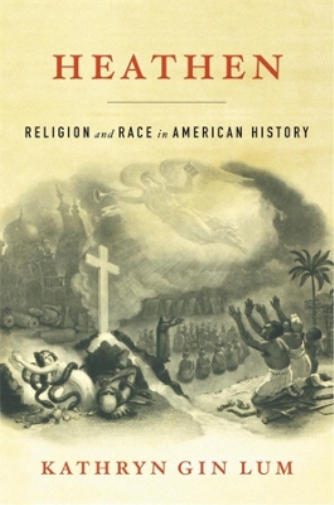
Religion and Race in American History. American ideas about race owe much to the notion of an undifferentiated “heathen world” held together by its need of assistance. This religious notion shaped American racial governance and undergirds American exceptionalism, even as purported heathens have drawn on their characterization as such to push back against this national myth. An innovative history that shows how the religious idea of the heathen in need of salvation undergirds American conceptions of race.
If an eighteenth-century parson told you that the difference between “civilization and heathenism is sky-high and star-far,” the words would hardly come as a shock. But that statement was written by an American missionary in 1971. In a sweeping historical narrative, Kathryn Gin Lum shows how the idea of the heathen has been maintained from the colonial era to the present in religious and secular discourses—discourses, specifically, of race.
Americans long viewed the world as a realm of suffering heathens whose lands and lives needed their intervention to flourish. The term “heathen” fell out of common use by the early 1900s, leading some to imagine that racial categories had replaced religious differences. But the ideas underlying the figure of the heathen did not disappear. Americans still treat large swaths of the world as “other” due to their assumed need for conversion to American ways. Purported heathens have also contributed to the ongoing significance of the concept, promoting solidarity through their opposition to white American Christianity. Gin Lum looks to figures like Chinese American activist Wong Chin Foo and Ihanktonwan Dakota writer Zitkála-Šá, who proudly claimed the label of “heathen” for themselves.
Race continues to operate as a heathen inheritance in the United States, animating Americans’ sense of being a world apart from an undifferentiated mass of needy, suffering peoples. Heathen thus reveals a key source of American exceptionalism and a prism through which Americans have defined themselves as a progressive and humanitarian nation even as supposed heathens have drawn on the same to counter this national myth.
ADDITIONAL DETAILS
DELIVERY & RETURNS
UK Delivery:
- Free delivery on all orders of £10 or more.
- £1.49 delivery fee on orders below £10.
- UK orders are shipped via Royal Mail 2nd Class.
International Delivery:
- Flat rate delivery charges vary by country.
Dispatch and Delivery Times:
- All orders are shipped from our warehouse in Northampton, UK within 48 hours of receipt during working hours.
- UK mainland orders typically arrive within 3-5 working days via Royal Mail 2nd Class.
- International estimated delivery times:
- Europe & Channel Islands: 7 to 10 working days
- USA: 7 to 15 working days
- Rest of the World: 9 to 21 working days
View our full delivery infomation here.
-
OVER
2 MILLION PRODUCTS
-
60 MILLION CUSTOMERS
ACROSS 190 COUNTRIES
You might also like
Loading recommendations...