

Ancestral Genomics
Ancestral Genomics
African American Health in the Age of Precision Medicine
Hardback
Couldn't load pickup availability
Join our rewards scheme and earn reward points on this purchase!
Earn points on this!
Sign in or Sign up!- Release Date: 16/04/2024
- Barcode: 9780674268609
- Genre: Society & Culture
- Sub-Genre: Social & Ethical Issues
- Imprint: Harvard University Press
- Publisher: Harvard University Press
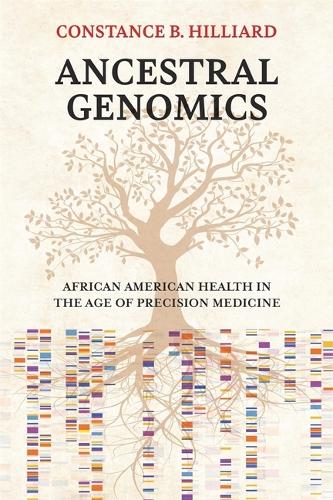

Ancestral Genomics
Couldn't load pickup availability
Collapsible content
DESCRIPTION
African American Health in the Age of Precision Medicine A leading evolutionary historian offers a radical solution to racial health disparities in the United States.
Race is a social reality, not a biological one. Yet African Americans are poorly served by even advanced genetic medicine because it is built on European DNA. Constance Hilliard explores the benefits and drawbacks of racial heuristics in medicine and argues for nonessentializing methods of harnessing genomic science on behalf of people of color.
Constance B. Hilliard was living in Japan when she began experiencing joint pain. Her doctor diagnosed osteoarthritis—a common ailment for someone her age. But her bloodwork showed something else: Hilliard, who had never had kidney problems, appeared to be suffering from renal failure. When she returned to Texas, however, a new round of tests showed that her kidneys were healthy. Unlike the Japanese doctor, her American primary care provider had checked a box on her lab report for “African American.” As a scholar of scientific racism, Hilliard was perplexed. Why should race, which experts agree has no biological basis, matter for getting accurate test results?
Ancestral Genomics is the result of Hilliard’s decade-long quest to solve this puzzle. In a masterful synthesis of evolutionary history, population genetics, and public health research, she addresses the usefulness of race as a heuristic in genomic medicine. Built from European genetic data, the Human Genome Project and other databases have proven inadequate for identifying disease-causing gene variants in patients of African descent. Such databases, Hilliard argues, overlook crucial information about the environments to which their ancestors’ bodies adapted prior to the transatlantic slave trade. Hilliard shows how, by analyzing “ecological niche populations,” a classification model that combines family and ecological histories with genetic information, our increasingly advanced genomic technologies, including personalized medicine, can serve African Americans and other people of color, while avoiding racial essentialism.
Forcefully argued and morally urgent, Ancestral Genomics is a clarion call for the US medical community to embrace our multigenomic society.
DELIVERY & RETURNS
UK Delivery:
- Free delivery on all orders of £10 or more.
- £1.49 delivery fee on orders below £10.
- UK orders are shipped via Royal Mail 2nd Class.
International Delivery:
- Flat rate delivery charges vary by country.
Dispatch and Delivery Times:
- All orders are shipped from our warehouse in Northampton, UK within 48 hours of receipt during working hours.
- UK mainland orders typically arrive within 3-5 working days via Royal Mail 2nd Class.
- International estimated delivery times:
- Europe & Channel Islands: 7 to 10 working days
- USA: 7 to 15 working days
- Rest of the World: 9 to 21 working days
View our full delivery infomation here.
-
OVER
2 MILLION PRODUCTS
-
60 MILLION CUSTOMERS
ACROSS 190 COUNTRIES
You might also like
Loading recommendations...