

State Institutions, Civic Associations, and Identity Demands
State Institutions, Civic Associations, and Identity Demands
Regional Movements in Greater Southeast Asia
Paperback
Couldn't load pickup availability
Join our rewards scheme and earn reward points on this purchase!
Earn points on this!
Sign in or Sign up!- Release Date: 12/03/2024
- Barcode: 9780472056071
- Genre: Society & Culture
- Sub-Genre: Politics & Government
- Imprint: University of Michigan Press
- Publisher: The University of Michigan Press
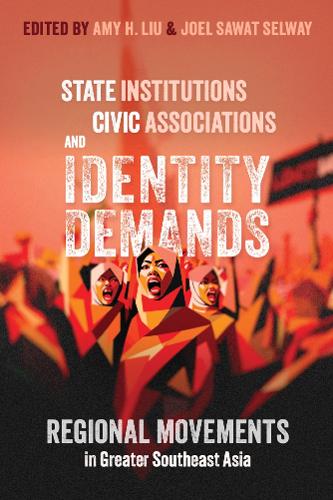

State Institutions, Civic Associations, and Identity Demands
Couldn't load pickup availability
Collapsible content
DESCRIPTION
Regional Movements in Greater Southeast Asia An in-depth look at why autonomy movements fail or succeed While the media tends to pay the most attention to violent secessionist movements or peaceful independence movements, it is just as important to understand why there are regions where political movements for autonomy fail to develop. In neglecting regions without political movements or full-blown independence demands, theories may be partial at best and incorrect at worst.
State Institutions, Civic Associations, and Identity Demands examines over a dozen regions, comparing and contrasting successful cases to abandoned, unsuccessful, or dormant cases. The cases range from successful secession (East Timor, Singapore) and ongoing secessionist movements (Southern Philippines), to internally divided regional movements (Kachin State), low-level regionalist stirrings (Lanna, Taiwan), and local but not regional mobilization of identity (Bali, Minahasan), all the way to failed movements (Bataks, South Maluku) and regions that remain politically inert (East and North Malaysia, Northeast Thailand). While each chapter is written by a country expert, the contributions rely on a range of methods, from comparative historical analysis, to ethnography, field interviews, and data from public opinion surveys. Together, they contribute important new knowledge on little-known cases that nevertheless illuminate the history of regions and ethnic groups in Southeast Asia. Although focused on Southeast Asia, the book identifies the factors that can explain why movements emerge and successfully develop and concludes with a chapter by Henry Hale that illustrates how this can be applied globally.
ADDITIONAL DETAILS
DELIVERY & RETURNS
UK Delivery:
- Free delivery on all orders of £10 or more.
- £1.49 delivery fee on orders below £10.
- UK orders are shipped via Royal Mail 2nd Class.
International Delivery:
- Flat rate delivery charges vary by country.
Dispatch and Delivery Times:
- All orders are shipped from our warehouse in Northampton, UK within 48 hours of receipt during working hours.
- UK mainland orders typically arrive within 3-5 working days via Royal Mail 2nd Class.
- International estimated delivery times:
- Europe & Channel Islands: 7 to 10 working days
- USA: 7 to 15 working days
- Rest of the World: 9 to 21 working days
View our full delivery infomation here.
-
OVER
2 MILLION PRODUCTS
-
60 MILLION CUSTOMERS
ACROSS 190 COUNTRIES
You might also like
Loading recommendations...