

Governing Disorder
Governing Disorder
UN Peace Operations, International Security, and Democratization in the Post–Cold War Era
Hardback
Couldn't load pickup availability
Join our rewards scheme and earn reward points on this purchase!
Earn points on this!
Sign in or Sign up!- Release Date: 02/03/2011
- Barcode: 9780271037615
- Genre: Society & Culture
- Sub-Genre: Politics & Government
- Imprint: Pennsylvania State University Press
- Publisher: Pennsylvania State University Press
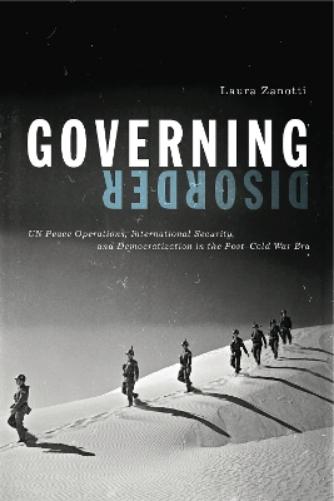

Governing Disorder
Couldn't load pickup availability
Collapsible content
DESCRIPTION
UN Peace Operations, International Security, and Democratization in the Post–Cold War Era Examines post-Cold War discourses about the use of power to promote international security. Uses case studies of United Nations interventions in Haiti and Croatia to highlight the dynamics at play in encounters between local societies and international peacekeepers. The end of the Cold War created an opportunity for the United Nations to reconceptualize the rationale and extent of its peacebuilding efforts, and in the 1990s, democracy and good governance became legitimizing concepts for an expansion of UN activities. The United Nations sought not only to democratize disorderly states but also to take responsibility for protecting people around the world from a range of dangers, including poverty, disease, natural disasters, and gross violations of human rights. National sovereignty came to be considered less an entitlement enforced by international law than a privilege based on states’ satisfactory performance of their perceived obligations. In Governing Disorder, Laura Zanotti combines her firsthand experience of UN peacebuilding operations with the insights of Michel Foucault to examine the genealogy of post–Cold War discourses promoting international security. Zanotti also maps the changes in legitimizing principles for intervention, explores the specific techniques of governance deployed in UN operations, and identifies the forms of resistance these operations encounter from local populations and the (often unintended) political consequences they produce. Case studies of UN interventions in Haiti and Croatia allow her to highlight the dynamics at play in the interactions between local societies and international peacekeepers.
DELIVERY & RETURNS
UK Delivery:
- Free delivery on all orders of £10 or more.
- £1.49 delivery fee on orders below £10.
- UK orders are shipped via Royal Mail 2nd Class.
International Delivery:
- Flat rate delivery charges vary by country.
Dispatch and Delivery Times:
- All orders are shipped from our warehouse in Northampton, UK as soon as stock is available.
- UK mainland orders typically arrive within 3-7 working days via Royal Mail 2nd Class.
- International estimated delivery times:
- Europe & Channel Islands: 7 to 10 working days
- USA: 7 to 15 working days
- Rest of the World: 9 to 30 working days
View our full delivery infomation here.
-
OVER
2 MILLION PRODUCTS
-
60 MILLION CUSTOMERS
ACROSS 190 COUNTRIES
You might also like
Loading recommendations...