

Religion and Broken Solidarities
Religion and Broken Solidarities
Feminism, Race, and Transnationalism
Hardback
Couldn't load pickup availability
Join our rewards scheme and earn reward points on this purchase!
Earn points on this!
Sign in or Sign up!- Release Date: 15/12/2022
- Barcode: 9780268203856
- Imprint: University of Notre Dame Press
- Publisher: University of Notre Dame Press
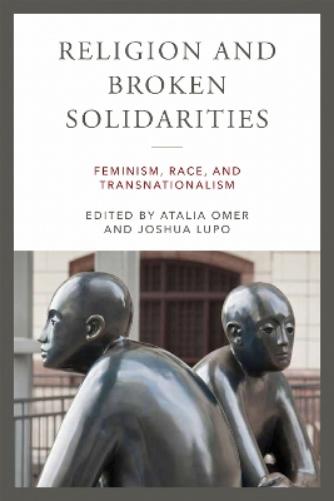

Religion and Broken Solidarities
Couldn't load pickup availability
Collapsible content
DESCRIPTION
Feminism, Race, and Transnationalism The contributors to this original volume provide a new and nuanced approach to studying how discourses of religion shape public domains in sites of political contestation and "broken solidarities." Our public discourse is saturated with intractable debates about religion, race, gender, and nationalism. Examples range from Muslim women and headscarves to Palestine/Israel and to global anti-Black racism, along with other pertinent issues. We need fresh thinking to navigate the questions that these debates raise for social justice and solidarity across lines of difference. In Religion and Broken Solidarities, the contributors provide powerful reflections and wisdom to guide how we can approach these questions with deep ethical commitments, intersectional sensibilities, and intellectual rigor. Religion and Broken Solidarities traces the role of religious discourse in unrealized moments of solidarity between marginalized groups who ostensibly share similar aims. Religion, the contributors contend, cannot be separated from national, racial, gendered, and other ways of belonging. These modes of belonging make it difficult for different minoritized groups to see how their struggles might benefit from engagement with one another. The four chapters, which interpret historical and contemporary events with a sharp and critical lens, examine accusations of antisemitism and anti-Muslim racism in the Women's March in Washington, DC; the failure of feminists in Iran and Turkey to realize a common cause because of nationalist discourse concerning religiosity and secularity; Black Catholics seeking to overcome the problems of modernity in the West; and the disjunction between the Palestinian and Mizrahi cause in Palestine/Israel. Together these analyses show that overcoming constraints to solidarity requires alternative imaginaries to that of the modern nation-state. Contributors: Atalia Omer, Joshua Lupo, Perin E. Gürel, Juliane Hammer, Ruth Carmi, Brenna Moore, and Melani McAlister.
ADDITIONAL DETAILS
DELIVERY & RETURNS
UK Delivery:
- Free delivery on all orders of £10 or more.
- £1.49 delivery fee on orders below £10.
- UK orders are shipped via Royal Mail 2nd Class.
International Delivery:
- Flat rate delivery charges vary by country.
Dispatch and Delivery Times:
- All orders are shipped from our warehouse in Northampton, UK as soon as stock is available.
- UK mainland orders typically arrive within 3-7 working days via Royal Mail 2nd Class.
- International estimated delivery times:
- Europe & Channel Islands: 7 to 10 working days
- USA: 7 to 15 working days
- Rest of the World: 9 to 30 working days
View our full delivery infomation here.
-
OVER
2 MILLION PRODUCTS
-
60 MILLION CUSTOMERS
ACROSS 190 COUNTRIES
You might also like
Loading recommendations...