

Finding Molly Johnson
Finding Molly Johnson
Irish Famine Orphans in Canada
Paperback
Couldn't load pickup availability
Join our rewards scheme and earn reward points on this purchase!
Earn points on this!
Sign in or Sign up!- Release Date: 15/09/2024
- Barcode: 9780228023005
- Genre: History
- Sub-Genre: European History
- Imprint: McGill-Queen's University Press
- Publisher: McGill-Queen's University Press
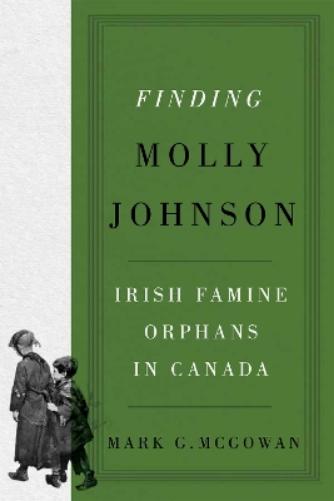

Finding Molly Johnson
Couldn't load pickup availability
Collapsible content
DESCRIPTION
Irish Famine Orphans in Canada Ireland's Great Famine produced Europe's worst refugee crisis of the nineteenth century. More than 1.5 million people left Ireland, many ending up in Canada. Among the most vulnerable were nearly 1,700 orphaned children who now found themselves destitute in an unfamiliar place. The story Canada likes to tell is that these orphans were adopted by benevolent families and that they readily adapted to their new lives, but this happy ending is mostly a myth. In Finding Molly Johnson Mark McGowan traces what happened to these children. In the absence of state support, the Catholic and Protestant churches worked together to become the orphans' principal caregivers. The children were gathered, fed, schooled, and placed in family homes in Saint John, Quebec, Montreal, Bytown, Kingston, and Toronto. Yet most were not considered members of their placement families, but rather sources of cheap labour. Many fled their placements, joining thousands of other Irish refugees on the Canadian frontier searching for work, extended family, and the opportunity to begin a new life. Finding Molly Johnson revisits an important chapter of the Irish emigrant experience, revealing that the story of Canada's acceptance of the famine orphans is a product of national myth-making that obscures both the hardship the children endured and the agency they ultimately expressed.
Mark McGowan revisits an important chapter of the Irish emigrant experience, revealing that the story of Canada’s acceptance of the famine orphans is a product of national myth-making that obscures both the hardship the children endured and the agency they ultimately expressed.
DELIVERY & RETURNS
UK Delivery:
- Free delivery on all orders of £10 or more.
- £1.49 delivery fee on orders below £10.
- UK orders are shipped via Royal Mail 2nd Class.
International Delivery:
- Flat rate delivery charges vary by country.
Dispatch and Delivery Times:
- All orders are shipped from our warehouse in Northampton, UK within 48 hours of receipt during working hours.
- UK mainland orders typically arrive within 3-5 working days via Royal Mail 2nd Class.
- International estimated delivery times:
- Europe & Channel Islands: 7 to 10 working days
- USA: 7 to 15 working days
- Rest of the World: 9 to 21 working days
View our full delivery infomation here.
-
OVER
2 MILLION PRODUCTS
-
60 MILLION CUSTOMERS
ACROSS 190 COUNTRIES
You might also like
Loading recommendations...