

Oedipus and the Sphinx
Oedipus and the Sphinx
The Threshold Myth from Sophocles through Freud to Cocteau
Hardback
Couldn't load pickup availability
Join our rewards scheme and earn 84 reward points on this purchase!
Earn 84 points on this!
Sign in or Sign up!- Release Date: 03/09/2013
- Barcode: 9780226048086
- Genre: Philosophy & Spirituality
- Imprint: University of Chicago Press
- Publisher: The University of Chicago Press
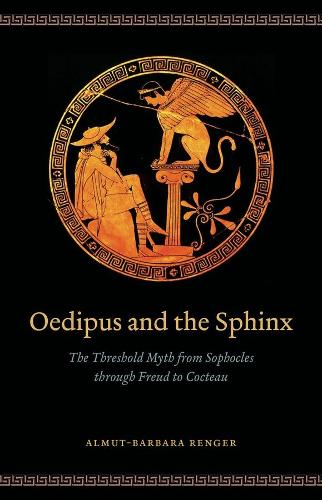

Oedipus and the Sphinx
Couldn't load pickup availability
Collapsible content
DESCRIPTION
The Threshold Myth from Sophocles through Freud to Cocteau
Revealing the narrative of Oedipus and the Sphinx to be the very paradigm of a key transition experienced by all of humankind, the author situates myth between the competing claims of science and art in an engagement that has important implications for the debates in literary studies, psychoanalytic theory, cultural history, and aesthetics.
When Oedipus met the Sphinx on the road to Thebes, he did more than answer a riddle - he spawned a myth that, told and retold, would become one of Western culture's central narratives about self-understanding. Identifying the story as a threshold myth - in which the hero crosses over into an unknown and dangerous realm where rules and limits are not known - Oedipus and the Sphinx offers a fresh account of this mythic encounter and how it deals with the concepts of liminality and otherness. Almut-Barbara Renger assesses the story's meanings and functions in classical antiquity - from its presence in ancient vase painting to its absence in Sophocles' tragedy - before arriving at two of its major reworkings in European modernity: the psychoanalytic theory of Sigmund Freud and the poetics of Jean Cocteau. Through her readings, she highlights the ambiguous status of the Sphinx and reveals Oedipus himself to be a liminal creature, providing key insights into Sophocles' portrayal and establishing a theoretical framework that organizes evaluations of the myth's reception in the twentieth century.Revealing the narrative of Oedipus and the Sphinx to be the very paradigm of a key transition experienced by all of humankind, Renger situates myth between the competing claims of science and art in an engagement that has important implications for current debates in literary studies, psychoanalytic theory, cultural history, and aesthetics.
ADDITIONAL DETAILS
DELIVERY & RETURNS
UK Delivery:
- Free delivery on all orders of £10 or more.
- £1.49 delivery fee on orders below £10.
- UK orders are shipped via Royal Mail 2nd Class.
International Delivery:
- Flat rate delivery charges vary by country.
Dispatch and Delivery Times:
- All orders are shipped from our warehouse in Northampton, UK within 48 hours of receipt during working hours.
- UK mainland orders typically arrive within 3-5 working days via Royal Mail 2nd Class.
- International estimated delivery times:
- Europe & Channel Islands: 7 to 10 working days
- USA: 7 to 15 working days
- Rest of the World: 9 to 21 working days
View our full delivery infomation here.
-
OVER
2 MILLION PRODUCTS
-
60 MILLION CUSTOMERS
ACROSS 190 COUNTRIES
You might also like
Loading recommendations...