

Predictions in the Brain
Predictions in the Brain
Hardback
Couldn't load pickup availability
Join our rewards scheme and earn reward points on this purchase!
Earn points on this!
Sign in or Sign up!- Release Date: 09/06/2011
- Barcode: 9780195395518
- Genre: Society & Culture

Predictions in the Brain
Couldn't load pickup availability
Collapsible content
DESCRIPTION
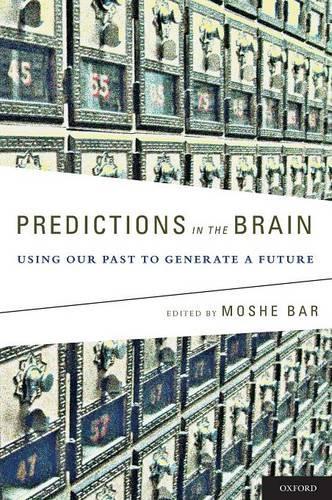
Using Our Past to Generate a Future. Predictions in the Brain presents state-of-the-art research and ideas about predictions as a universal principle in mind and brain. The book stimulates important new research into the foundations of our mental lives. When one is immersed in the fascinating world of neuroscience findings, the brain might start to seem like a collection of "modules," each specializes in a specific mental feat. But just like in other domains of Nature, it is possible that much of the brain and mind's operation can be explained with a small set of universal principles. Given exciting recent developments in theory, empirical findings and computational studies, it seems that the generation of predictions might be one strong candidate for such a universal principle. This is the focus of Predictions in the brain. From the predictions required when a rat navigates a maze to food-caching in scrub-jays; from predictions essential in decision-making to social interactions; from predictions in the retina to the prefrontal cortex; and from predictions in early development to foresight in non-humans. The perspectives represented in this collection span a spectrum from the cellular underpinnings to the computational principles underlying future-related mental processes, and from systems neuroscience to cognition and emotion. In spite of this diversity, they share some core elements. Memory, for instance, is critical in any framework that explains predictions. In asking "what is next? " our brains have to refer to memory and experience on the way to simulating our mental future. But as much as this collection offers answers to important questions, it raises and emphasizes outstanding ones. How are experiences coded optimally to afford using them for predictions? How do we construct a new simulation from separate memories? How specific in detail are future-oriented thoughts, and when do they rely on imagery, concepts or language? Therefore, in addition to presenting the state-of-the-art of research and ideas about predictions as a universal principle in mind and brain, it is hoped that this collection will stimulate important new research into the foundations of our mental lives.
DELIVERY & RETURNS
UK Delivery:
- Free delivery on all orders of £10 or more.
- £1.49 delivery fee on orders below £10.
- UK orders are shipped via Royal Mail 2nd Class.
International Delivery:
- Flat rate delivery charges vary by country.
Dispatch and Delivery Times:
- All orders are shipped from our warehouse in Northampton, UK within 48 hours of receipt during working hours.
- UK mainland orders typically arrive within 3-5 working days via Royal Mail 2nd Class.
- International estimated delivery times:
- Europe & Channel Islands: 7 to 10 working days
- USA: 7 to 15 working days
- Rest of the World: 9 to 21 working days
View our full delivery infomation here.
-
OVER
2 MILLION PRODUCTS
-
60 MILLION CUSTOMERS
ACROSS 190 COUNTRIES
You might also like
Loading recommendations...