

Sambossa
Sambossa
CD
Couldn't load pickup availability
Join our rewards scheme and earn reward points on this purchase!
Earn points on this!
Sign in or Sign up!- Release Date: 03/11/2003
- Barcode: 8040180038204
- Duration: 28.40 minutes
- Edition: Album
- Genre: General
- Label Family: Whatmusic
- Subgenre: tbc

Sambossa
Album
Couldn't load pickup availability
Collapsible content
DESCRIPTION
PRODUCT DESCRIPTION
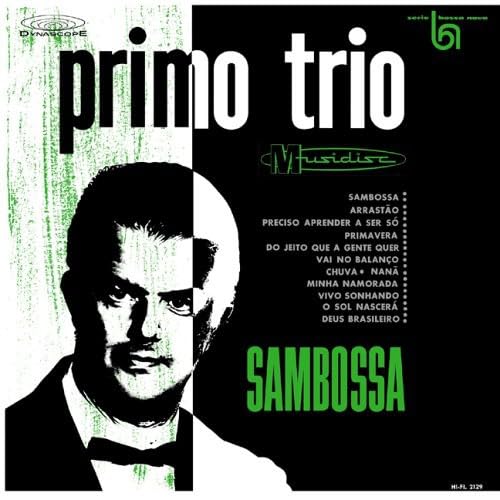
Whatmusic presents Sambossa, a rare early bossa trio date from pianist Primo Jr.!
* First ever worldwide release! * Tracks include the classics Nanã, Sambossa & Arrastão! * Remastered from original tapes! * Exclusive new liner notes
This release is dedicated to the memory of Primo Jr.
Remastered from the original stereo tapes by Ricardo Garcia at Magic Master Rio de Janeiro March 2002 with additional mastering by Sean Big P Pennycook
Special thanks to Durval Ferreira, Nilo Sérgio & Ary at Musidisc
FROM THE ARTIST
Primo Jr. recorded two LPs with the classic piano/bass/drums format for Musidisc. This album, Sambossa, is the second of the two titles and features a good number of those tunes that are certain to make a bossa trio album a classic.
Side one opens with Edu Lobos Festival winner Arrastão, a song given English lyrics by Alan & Marilyn Bergman and later recorded by Sergio Mendes & Brasil 77 as For Me. The impressive thing about the bossa jazz trios of this time was their leaders abilities to reinvent ways to arrange those same well-known songs that all the other trios were also recording.
Primavera is an early Marcos Valle number tastefully rendered here at a swinging mid-tempo. Vai No Balanço by Luiz Bittencourt, son of Jacob do Bandolim, is from the golden era of samba-canção, a subtle and melancholy tune redolent of lovers quarrels.
Chuva, also known as Rain, is by Durval Ferreira and Pedro Camargo. A classic of early 60s bossa and covered by many in Brazil and the USA. Do Jeito Que a Gente Quer is an oddity here. The song swings with force and has more than a touch of the influencia do jazz that Carlos Lyra bemoaned in his eponymous song. Not too many Ed Lincoln compositions made it onto bossa nova albums, principally because Lincoln and his Zona Norte pals with their sambalanço were diametrically opposed to the winsome Zona Sul airs that often passed for second division bossa in the early 60s. But its inclusion here shows not only Lincolns compositional craft but also, with hindsight, how stupid factionism is.
ADDITIONAL DETAILS
DELIVERY & RETURNS
UK Delivery:
- Free delivery on all orders of £10 or more.
- £1.49 delivery fee on orders below £10.
- UK orders are shipped via Royal Mail 2nd Class.
International Delivery:
- Flat rate delivery charges vary by country.
Dispatch and Delivery Times:
- All orders are shipped from our warehouse in Northampton, UK as soon as stock is available.
- UK mainland orders typically arrive within 3-7 working days via Royal Mail 2nd Class.
- International estimated delivery times:
- Europe & Channel Islands: 7 to 10 working days
- USA: 7 to 15 working days
- Rest of the World: 9 to 30 working days
View our full delivery infomation here.
-
OVER
2 MILLION PRODUCTS
-
60 MILLION CUSTOMERS
ACROSS 190 COUNTRIES
Fans of this product are also looking at...
Loading recommendations...