

Casa De Los Babys
Casa De Los Babys
CD
Couldn't load pickup availability
Join our rewards scheme and earn reward points on this purchase!
Earn points on this!
Sign in or Sign up!- Release Date: 09/02/2007
- Barcode: 0614992003125

Casa De Los Babys
Couldn't load pickup availability
Collapsible content
DESCRIPTION
EDITORIAL REVIEWS
AMAZON
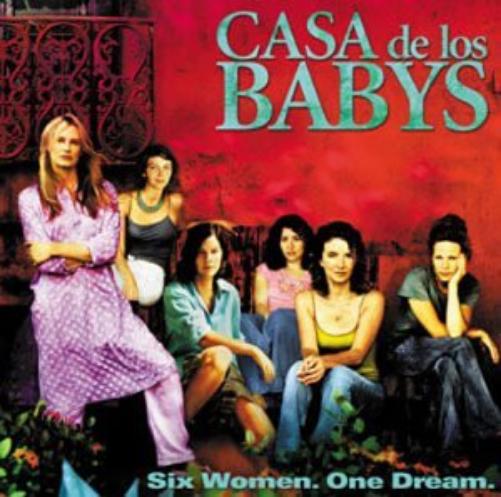
Director John Sayles has long excelled in films driven by character-rich interpersonal relationships, and this tale of six disparate women who find themselves thrown together in a South American motel waiting for bureaucrats to process their adoption papers for a local orphanage is no exception. Sayles obviously handpicked this diverse collection of songs and styles to underscore the tropical mood and rich emotional tenor of his story, but his selections also display a playful delight in willfully debunking various Latin music sterotypes as well. The retro doo-wop of Las Zafiras, sultry ballads of Broadway star Rita Moreno and spare modernism of Lhasa prove that influences migrate freely both ways across the equator, while Carlos Puebla and Ruben Blades display the compassion beneath their oft-politicized music. The collaborations of Mason Daring and Claudio Ragazzi (including the Moreno-performed "Quien Sera") further underscore the sense of pan-American richness that informs this compelling soundtrack from first cut to last. -- Jerry McCulley
ABOUT THE ARTIST
From Director John Sayles: Casa de los Babys gave me an opportunity to continue the exploration of Latin music worldwide that I'd started on Men With Guns. The film is set in an indeterminate South American country, and I wanted the music to reflect a wide range of national styles as well as to make the scenes work better on screen. Music can help glue various cuts together, it can underline, it can comment ironically, or it can go straight for the viscera.
I don't remember who gave me the album by Lhasa, a French-Canadian group that records in several languages, but their De Cara a la Pared (Face to the Wall) stuck in my mind and proved to be a great, Cowboy Junkies-like slow burn to drive the montage of poor workers gathering and descending the mountain to their low-paid jobs.
Ruben Blades' Un Son Para Ti (A Song For You), with the Panamanian salsero singing in the character of Medoro Madera has the sharp edges and infectious rhythm to cut through a crowded market scene and give it some architecture.
Los Zafiros were a doo-wop group famous in early-60's Havana who had a short and tragic trajectory. The slow-dance He Venido a Decirte (I Came to Tell You) and Canción de Orfeo (Orpheus' Song) feature the haunting, stratospheric soprano of Ignacio Elejalde and only improve with echo added for exterior filming. Canción was featured decades ago in the movie Black Orpheus and here is sung in Portuguese by a Cuban group.
Rita Moreno, the triple-threat performer from Puerto Rico, not only appears in the film as hotel owner Seflora Muñoz, but sings Quién Será? (Who Will Be?) which composer Mason Daring and I wrote in the tradition of no-emotion-spared divas like Chelo Silva and Chavela Vargas. Grupo Fantasma, a killer dance band out of Austin, Texas, contribute their arrangement of Caña Brava, a driving merengue that propels us into the night portion of the movie.
Lila Downs, an incredible singer-songwriter featured prominently in the movie Frida, adds her version of the heartbreaking Naela. Anybody not familiar with Downs' work should definitely check her out- incredible vocal range and musicality combined with complex lyrics sung in Spanish, English and various indigenous languages.
Siboney, the classic by Ernesto Lecuona, whose work influenced George Gershwin, is performed by the trio Los Panchos, who figured prominently in the Golden Era of Mexican cinema.
Hasta Siempre (Forever) is an ode to Che Guevara by the Cuban trova legend Carlos Puebla, and lends the proper air of left-wing nostalgia to the café ruminations of three ex-radicals in the film. And over the credits I used the lullaby Duerme Negrito, sung by the Argentinean Atahualpa Yupanqui, a seminal guitarist and folksinger and the perfect person to put the movie to bed.
In the film the music is often used in bits and pieces, mixed into or under the dialogue. Here is a chance to hear it stand alone, to meet the artists on their own turf. Happy listening,John Sayles
ADDITIONAL DETAILS
DELIVERY & RETURNS
UK Delivery:
- Free delivery on all orders of £10 or more.
- £1.49 delivery fee on orders below £10.
- UK orders are shipped via Royal Mail 2nd Class.
International Delivery:
- Flat rate delivery charges vary by country.
Dispatch and Delivery Times:
- All orders are shipped from our warehouse in Northampton, UK within 48 hours of receipt during working hours.
- UK mainland orders typically arrive within 3-5 working days via Royal Mail 2nd Class.
- International estimated delivery times:
- Europe & Channel Islands: 7 to 10 working days
- USA: 7 to 15 working days
- Rest of the World: 9 to 21 working days
View our full delivery infomation here.
-
OVER
2 MILLION PRODUCTS
-
60 MILLION CUSTOMERS
ACROSS 190 COUNTRIES
Fans of this product are also looking at...
Loading recommendations...