

Seven Obscure Languages in Seven Weeks
Seven Obscure Languages in Seven Weeks
Rediscovering the Tools That Built the Future
Paperback
Couldn't load pickup availability
Join our rewards scheme and earn reward points on this purchase!
Earn points on this!
Sign in or Sign up!- Release Date: 26/12/2024
- Barcode: 9798888650639
- Genre: Non-Fiction
- Sub-Genre: Computing & The Internet
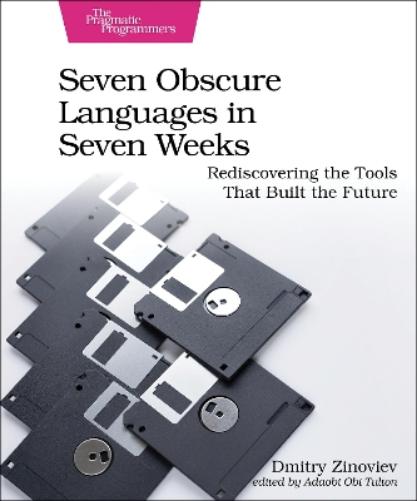

Seven Obscure Languages in Seven Weeks
Couldn't load pickup availability
Collapsible content
DESCRIPTION
Rediscovering the Tools That Built the Future Seven old languages; dozens of new ideas that can help shape the way we think about programming. Have you noticed that most programming languages look the same nowadays? We’ve become complacent; we’ve fallen into a rut. We’re no longer innovating; we’re tinkering at the margins. Fifty years ago, things were less settled. Smart people exercised their imaginations and came up with programming paradigms that will blow you away. Classes and objects, first seen in the 1960s with Simula, are still in use. But what about a language with no variables? Or one where the units of computation are independent actors? Or where every single character can express a complex operation? Imagine a language where the only flow control comes from matching patterns, or one that uses sets as its major datatype. Or how about a textual language based on macros? These seven old, obscure languages will open your eyes to new ways of thinking about programming, and change the way you code today.
Explore seven older computer languages and discover new and fresh ideas that will change the way you think about programming. These languages were invented before we settled into our current C-style syntax and OO biases, so language designers were free to imagine what was possible.
Explore seven older computer languages and discover new and fresh ideas that will change the way you think about programming. These languages were invented before we settled into our current C-style syntax and OO biases, so language designers were free to imagine what was possible. You’ll find their insights thought-provoking, and their ideas will inspire you to try different (and possibly more productive) ways of programming. From a text manipulation language where every line is a potential state machine event, to a concurrent language where everything is done using actors, you’re sure to come away from these seven languages inspired and excited.
DELIVERY & RETURNS
UK Delivery:
- Free delivery on all orders of £10 or more.
- £1.49 delivery fee on orders below £10.
- UK orders are shipped via Royal Mail 2nd Class.
International Delivery:
- Flat rate delivery charges vary by country.
Dispatch and Delivery Times:
- All orders are shipped from our warehouse in Northampton, UK within 48 hours of receipt during working hours.
- UK mainland orders typically arrive within 3-5 working days via Royal Mail 2nd Class.
- International estimated delivery times:
- Europe & Channel Islands: 7 to 10 working days
- USA: 7 to 15 working days
- Rest of the World: 9 to 21 working days
View our full delivery infomation here.
-
OVER
2 MILLION PRODUCTS
-
60 MILLION CUSTOMERS
ACROSS 190 COUNTRIES
You might also like
Loading recommendations...