

Vestiges of the Three Kingdoms of Ancient Korea
Vestiges of the Three Kingdoms of Ancient Korea
A Translation of the Samguk Yusa
Hardback
Couldn't load pickup availability
Join our rewards scheme and earn reward points on this purchase!
Earn points on this!
Sign in or Sign up!- Release Date: 31/10/2025
- Barcode: 9798880701858
- Imprint: University of Hawaii Press
- Publisher: University of Hawai'i Press
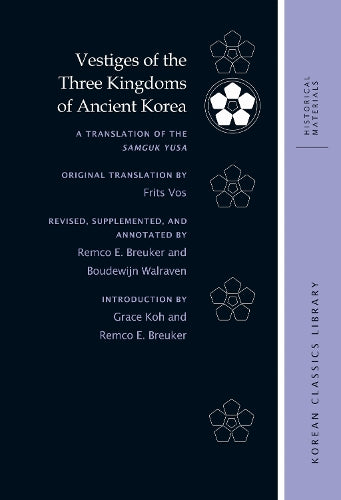

Vestiges of the Three Kingdoms of Ancient Korea
Couldn't load pickup availability
Collapsible content
DESCRIPTION
A Translation of the Samguk Yusa
Vestiges of the Three Kingdoms of Ancient Korea (Samguk yusa) is the first annotated English translation of one of the most important premodern Korean historical texts. One of only two surviving works on the Three Kingdoms period (57 BCE–668) and Greater Silla (668–936), the Samguk yusa is a rich collection of historical, supernatural, and mythical stories, including one of the earliest surviving narratives of Tan’gun, who in modern times came to be regarded as the mythical or legendary progenitor of the Korean people.
Compiled primarily in classical Chinese during the Koryŏ period (918–1392), the Samguk yusa is known for its idiosyncratic structure and eclectic content. Although strongly Buddhist in orientation and generally assumed to have been compiled in large part by the celebrated monk Iryŏn (1206–1289), the work also encompasses Confucianism, geomancy, secular history, and folklore. It was not highly regarded during the Chosŏn period (1392–1910) but re-emerged in the twentieth century as a Korean foundational text. Today the Samguk yusa is celebrated as a national treasure of native Korean tradition and heritage and continues to play a crucial role in forming Korean identity north and south of the border. References to it are commonplace in contemporary Korea, with new translations and adaptations of its narratives frequently published.
This annotated translation, the result of many years’ work by Frits Vos, a pioneer of Korean studies in Europe, and later colleagues, includes a critical introduction that illuminates the text's history, reception, and broader historical context and offers an analytical overview of the themes and literary strategy of the work.
ADDITIONAL DETAILS
DELIVERY & RETURNS
UK Delivery:
- Free delivery on all orders of £10 or more.
- £1.49 delivery fee on orders below £10.
- UK orders are shipped via Royal Mail 2nd Class.
International Delivery:
- Flat rate delivery charges vary by country.
Dispatch and Delivery Times:
- All orders are shipped from our warehouse in Northampton, UK within 48 hours of receipt during working hours.
- UK mainland orders typically arrive within 3-5 working days via Royal Mail 2nd Class.
- International estimated delivery times:
- Europe & Channel Islands: 7 to 10 working days
- USA: 7 to 15 working days
- Rest of the World: 9 to 21 working days
View our full delivery infomation here.
-
OVER
2 MILLION PRODUCTS
-
60 MILLION CUSTOMERS
ACROSS 190 COUNTRIES
You might also like
Loading recommendations...