

The Belt and Road Initiative at Ten
The Belt and Road Initiative at Ten
From Macro, Financial and Industrial Trends
Hardback
Couldn't load pickup availability
Join our rewards scheme and earn reward points on this purchase!
Earn points on this!
Sign in or Sign up!- Release Date: 28/08/2024
- Barcode: 9789819744671
- Genre: Non-Fiction
- Sub-Genre: Business & Finance
- Imprint: Springer
- Publisher: Springer
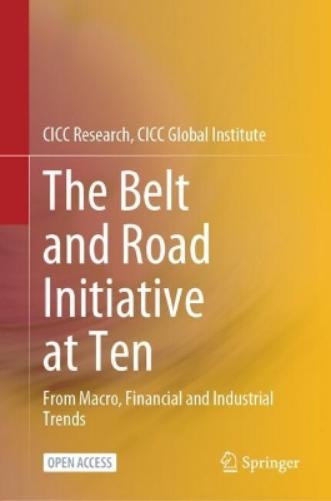

The Belt and Road Initiative at Ten
2024 ed.
Couldn't load pickup availability
Collapsible content
DESCRIPTION
From Macro, Financial and Industrial Trends This open access book analyzes the achievements and challenges of the Belt and Road Initiative (BRI) from the macro and industrial, real and financial, domestic and international perspectives, and explores the opportunities for future development and related public policy issues. It is a new research achievement of CICC Research and CICC Global Institute on major issues in China’s new development stage. The year 2023 marks the tenth anniversary of the Belt and Road Initiative (BRI). Over the past decade, BRI has established more than 3,000 cooperation projects, galvanized nearly 1 trillion U.S. dollars of investment, created more than 420,000 jobs, and lifted nearly 40 million people out of poverty. BRI has made remarkable achievements in promoting connectivity and cooperative development between China and participating countries, and has been welcomed by the international community both as a public good and a cooperation platform. Compared with ten years ago, the global environment has undergone profound changes. COVID-19 epidemic has brought great impacts to the world, and the post-epidemic economic recovery is uneven, with some long-term scarring effects still emerging. New changes and constraints, such as geopolitical events, industry chain adjustment, and green transition, have also exerted far-reaching influences on the economic fundamentals and global governance. Under the new situation, international cooperation mechanisms, including BRI, are facing new problems and challenges, which need to be explored and solved in practice. This book is both academically rigorous and readable, and provides valuable references for public policy departments, enterprises, and financial institutions who seek to better understand the macro, financial and industrial trends of BRI.
DELIVERY & RETURNS
UK Delivery:
- Free delivery on all orders of £10 or more.
- £1.49 delivery fee on orders below £10.
- UK orders are shipped via Royal Mail 2nd Class.
International Delivery:
- Flat rate delivery charges vary by country.
Dispatch and Delivery Times:
- All orders are shipped from our warehouse in Northampton, UK as soon as stock is available.
- UK mainland orders typically arrive within 3-7 working days via Royal Mail 2nd Class.
- International estimated delivery times:
- Europe & Channel Islands: 7 to 10 working days
- USA: 7 to 15 working days
- Rest of the World: 9 to 30 working days
View our full delivery infomation here.
-
OVER
2 MILLION PRODUCTS
-
60 MILLION CUSTOMERS
ACROSS 190 COUNTRIES
You might also like
Loading recommendations...