

Data in Context
Data in Context
Paperback
Couldn't load pickup availability
Join our rewards scheme and earn reward points on this purchase!
Earn points on this!
Sign in or Sign up!- Release Date: 01/08/2023
- Barcode: 9783031355387
- Edition: 1st ed. 2023
- Genre: Business & Finance
- Subgenre: Computing & Internet
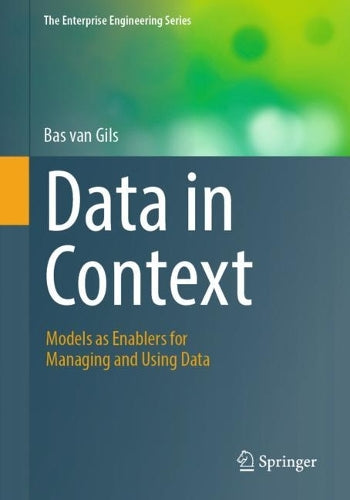

Data in Context
1st ed. 2023
Couldn't load pickup availability
Collapsible content
DESCRIPTION
Models as Enablers for Managing and Using Data
Data is an increasingly important asset for many organizations. This book shows how to model data in a way that allows to exploit this asset effectively and in every respect. To this end, it combines and exploits scientific (semiotics, relational model, etc.) and pragmatic theories (most prominently: the DAMA wheel) and provides a coherent overview from a business and an IT/ICT perspective.
After a brief introduction, the remaining book consists of three parts. In Part I “Data”, the focus is on understanding data. It includes theories in semiotics, the relational model, and normalization, as well as related theories around understanding data/designing sound data structures. This part is complemented by an extensive chapter on how to design effective data structures and a smaller one on the topic of create versus use context. Part II “Data Management” then focuses on managing data as an asset. This part is based on the DMBOK and each of the functional areas is discussed in a separate chapter. Part III “Parting Thoughts” presents conclusions which are based on a synthesis of Part I and Part II, leading up to a summary of the main contributions of this book as well as a critical reflection on these results.
This book is written for a rather broad audience, ranging from professionals to students, both from business, computer science, and information management. The writing style is adjusted specifically for these groups. At the end of each chapter reflection questions are included that distinguish between questions for practitioners and for students and help both audiences to benefit from the book and check their comprehension.
DELIVERY & RETURNS
UK Delivery:
- Free delivery on all orders of £10 or more.
- £1.49 delivery fee on orders below £10.
- UK orders are shipped via Royal Mail 2nd Class.
International Delivery:
- Flat rate delivery charges vary by country.
Dispatch and Delivery Times:
- All orders are shipped from our warehouse in Northampton, UK as soon as stock is available.
- UK mainland orders typically arrive within 3-7 working days via Royal Mail 2nd Class.
- International estimated delivery times:
- Europe & Channel Islands: 7 to 10 working days
- USA: 7 to 15 working days
- Rest of the World: 9 to 30 working days
View our full delivery infomation here.
-
OVER
2 MILLION PRODUCTS
-
60 MILLION CUSTOMERS
ACROSS 190 COUNTRIES
You might also like
Loading recommendations...