

When Roe Fell
When Roe Fell
How Barriers, Inequities, and Systemic Failures of Justice in Abortion Became Visible
Paperback
Couldn't load pickup availability
Join our rewards scheme and earn reward points on this purchase!
Earn points on this!
Sign in or Sign up!- Release Date: 11/11/2025
- Barcode: 9781978841925
- Genre: Non-Fiction
- Sub-Genre: Medicine
- Imprint: Rutgers University Press
- Publisher: Rutgers University Press
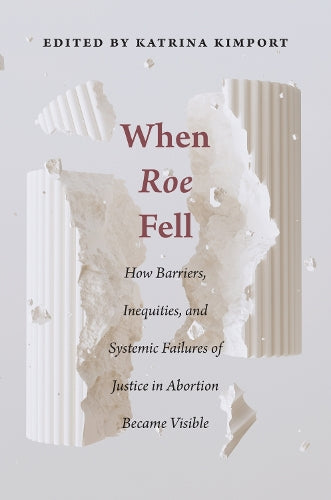

When Roe Fell
Couldn't load pickup availability
Collapsible content
DESCRIPTION
How Barriers, Inequities, and Systemic Failures of Justice in Abortion Became Visible
In June 2022, Roe was overturned. The constitutional right to abortion was gone, and abortion was soon banned or severely restricted in states across the country. Clinics closed. Abortion seekers were turned away. It was a bombshell, dramatically altering the geographical landscape of abortion legality and availability. But it did not change everything. Even under Roe, for many in the US, abortion was a right in name only. The fall of Roe changed a great deal, but it is also noteworthy for what it did not change-and, perhaps, for what it made more visible about whom the Roe legal regime served and whom it failed.
In this volume, an interdisciplinary group of abortion scholars examines the history, politics, and practical experience of abortion leading up to the overturning of Roe, placing this judicial decision in a longer history of abortion in the US. Chapters delve into what the fall of Roe revealed about abortion seekers, abortion provision, and abortion advocacy. With diverse voices, formats, and styles, chapters include geographically specific deep dives and incisive big picture assessments. Collectively, they demystify abortion and abortion research, laying bare common misunderstandings and misinformation about the topic, and belying claims that Dobbs “changed everything.” In the aftermath of the fall of Roe, this volume offers readers the opportunity to reorient scholarship and understanding about abortion, recognizing what was already true before Roe was overturned and how losing the protections of Roe forced, enabled, and perhaps even facilitated a new era of abortion. Only by understanding the historical moment when Roe fell can we anticipate what might happen next in the ongoing social and political contention over reproductive autonomy and freedom.
ADDITIONAL DETAILS
DELIVERY & RETURNS
UK Delivery:
- Free delivery on all orders of £10 or more.
- £1.49 delivery fee on orders below £10.
- UK orders are shipped via Royal Mail 2nd Class.
International Delivery:
- Flat rate delivery charges vary by country.
Dispatch and Delivery Times:
- All orders are shipped from our warehouse in Northampton, UK as soon as stock is available.
- UK mainland orders typically arrive within 3-7 working days via Royal Mail 2nd Class.
- International estimated delivery times:
- Europe & Channel Islands: 7 to 10 working days
- USA: 7 to 15 working days
- Rest of the World: 9 to 30 working days
View our full delivery infomation here.
-
OVER
2 MILLION PRODUCTS
-
60 MILLION CUSTOMERS
ACROSS 190 COUNTRIES
You might also like
Loading recommendations...