

A Sourcebook for Classical Rhetoric
A Sourcebook for Classical Rhetoric
Paperback
Couldn't load pickup availability
Join our rewards scheme and earn reward points on this purchase!
Earn points on this!
Sign in or Sign up!- Release Date: 31/03/2024
- Barcode: 9781949822427
- Imprint: Catholic University Press
- Publisher: The Catholic University of America Press
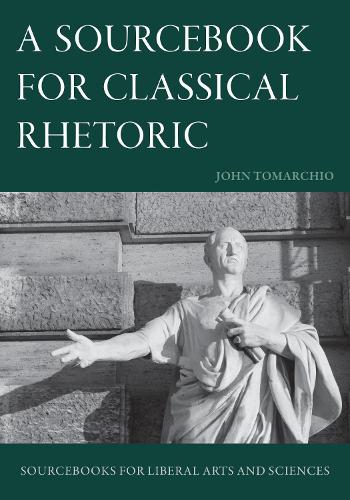

A Sourcebook for Classical Rhetoric
Couldn't load pickup availability
Collapsible content
DESCRIPTION
A Sourcebook intended for students of liberal arts and great books. It treats such books as primary sources for inquiring into the nature of human speech because they clarify the terms and stakes of perennial questions thinking human beings ask themselves about persuasive speaking.
This Sourcebook is intended for students of liberal arts and great books. It treats such books as primary sources for inquiring into the nature of human speech because they clarify the terms and stakes of perennial questions thinking human beings ask themselves about persuasive speaking. By crystallizing viable claims about the nature of what we confront in politics and society--live claims for us to confront in our own, with the stakes of that confrontation being live as well--they originate a dialectic with one another and with us their readers.
Cicero called rhetoric a liberal art necessary for every citizen of a free republic. In the polities of ancient Greece and Rome, rhetoric was politically potent because oratory was the regular means of political decision. Words were decisive, often a matter of life and death, not merely for individuals but for peoples. In human milieux where human speech is so politically decisive, reflection upon its nature became keen.
The selections of this sourcebook have been arranged in three sequences. The first two sequences comprise philosophical dialogues on the ends of rhetoric. Selections from Plato's Gorgias, Phaedrus, and Apology examine the rhetorician or teacher of rhetoric, and then Cicero's De oratore offers us a dialectic among practitioners about its practice. The philosophical dialogues on the art's intended ends and causative effects provide the theoretical and ethical context for examining its means. These philosophical dialogues are thus propaedeutic to the third sequence, which focusses on the art itself with selections from Aristotle's treatise On Rhetoric, paired with orations from Thucydides' History of the Peloponnesian War.
DELIVERY & RETURNS
UK Delivery:
- Free delivery on all orders of £10 or more.
- £1.49 delivery fee on orders below £10.
- UK orders are shipped via Royal Mail 2nd Class.
International Delivery:
- Flat rate delivery charges vary by country.
Dispatch and Delivery Times:
- All orders are shipped from our warehouse in Northampton, UK as soon as stock is available.
- UK mainland orders typically arrive within 3-7 working days via Royal Mail 2nd Class.
- International estimated delivery times:
- Europe & Channel Islands: 7 to 10 working days
- USA: 7 to 15 working days
- Rest of the World: 9 to 30 working days
View our full delivery infomation here.
-
OVER
2 MILLION PRODUCTS
-
60 MILLION CUSTOMERS
ACROSS 190 COUNTRIES
You might also like
Loading recommendations...