

The Lausanne Moment
The Lausanne Moment
Reckoning with the 1923 Treaty of Peace and Its Legacies
Hardback
Couldn't load pickup availability
Join our rewards scheme and earn reward points on this purchase!
Earn points on this!
Sign in or Sign up!- Release Date: 27/11/2025
- Barcode: 9781914983375
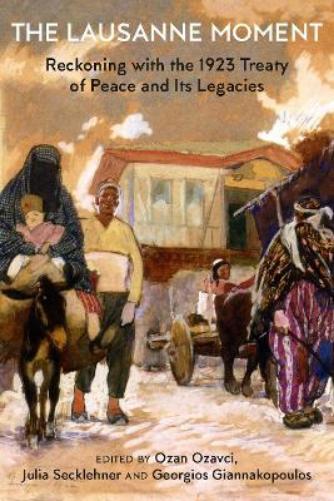

The Lausanne Moment
Couldn't load pickup availability
Collapsible content
DESCRIPTION
Reckoning with the 1923 Treaty of Peace and Its Legacies Over one hundred years after the signing of the Treaty of Lausanne in 1923, The Lausanne Moment revisits a diplomatic, legal, economic and financial juncture that helped reshape the world and defined new norms of sovereignty, displacement, and identity. The Treaty of Lausanne (1923) remains one of the few interwar peace settlements that has endured into the twenty-first century. Yet, the memory of Lausanne has proved deeply contested. Celebrated by some as a triumph of state sovereignty and peace-making, it has also come to symbolise forced displacement, the erasure of minority rights, and the codification of population transfers as instruments of international order. Reckoning with Loss addresses the shifting interpretations of the treaty across national contexts, tracing how its provisions have been legally, socially, and politically reimagined—whether in debates over the application of Sharia in Greece’s Western Thrace, or diplomatic flare-ups over its possible revision. One hundred years after the signing of the Treaty of Lausanne, Reckoning with Loss revisits what is often termed the “Lausanne moment”—a diplomatic, legal, economic and financial juncture that helped reshape the world and defined new norms of sovereignty, displacement, and identity. Building on a growing body of interdisciplinary scholarship and serving as a sequel to They All Made Peace – What is Peace? (Gingko, 2023), the edited volume foregrounds the lived realities and long-term legacies of the treaty, critically re-examining the political, cultural, and social consequences of its provisions and aftershocks. Rather than focusing solely on high diplomacy or legal text, Reckoning with Loss brings into view the human dimension of the Lausanne moment. Through case studies ranging from the refugee experience in Nikaia and Asia Minor orphans in Greece, to the enduring memory of loss in Pontic singing, the symbolic ethnicity of Cretan descendants and the Kurdish experience in Turkey, the book documents the deeply personal and community-level consequences of forced migration and political rupture. These experiences are not confined to the immediate postwar period; they linger across time, informing the present-day politics of memory, migration, and identity. The volume also interrogates the geopolitics of Lausanne through new thematic lenses. Essays explore how the treaty facilitated the continuation of imperial practices under new nationalist forms, shaped debates over public debt and cultural heritage, and affected actors and regions often overlooked in Lausanne historiography—such as Albania, Cyprus, and the Kurdish nationalist movements. Lausanne’s cultural afterlives, from its role in shaping archaeology, music, and education policy, to the short-lived invention and later erasure of “Lausanne Day” from Turkey’s official commemorative calendar are also covered in the book. Reckoning with Loss situates the 1923 treaty within broader histories of state-led population engineering, colonial eugenic practices, and the moral politics of international humanitarianism. The “peace” of Lausanne, the volume suggests, was neither absolute nor apolitical—it was crafted, contested, and constantly renegotiated. The book’s contributors collectively ask not only what peace meant in 1923, but also what it means today for those still living with its consequences. Through its interdisciplinary and transregional approach, Reckoning with Loss breaks new ground in Lausanne studies. It brings together historians, anthropologists, archaeologists, political scientists, and cultural theorists, and introduces voices and perspectives—Kurdish, Cypriot, Pontic, Albanian, and Cretan—that have been marginal to mainstream narratives. By weaving together policy analysis, oral history, cultural production, and historical research, the volume offers an expansive and textured account of one of the twentieth century’s most consequential, yet paradoxical, peace settlements.
ADDITIONAL DETAILS
DELIVERY & RETURNS
UK Delivery:
- Free delivery on all orders of £10 or more.
- £1.49 delivery fee on orders below £10.
- UK orders are shipped via Royal Mail 2nd Class.
International Delivery:
- Flat rate delivery charges vary by country.
Dispatch and Delivery Times:
- All orders are shipped from our warehouse in Northampton, UK within 48 hours of receipt during working hours.
- UK mainland orders typically arrive within 3-5 working days via Royal Mail 2nd Class.
- International estimated delivery times:
- Europe & Channel Islands: 7 to 10 working days
- USA: 7 to 15 working days
- Rest of the World: 9 to 21 working days
View our full delivery infomation here.
-
OVER
2 MILLION PRODUCTS
-
60 MILLION CUSTOMERS
ACROSS 190 COUNTRIES
You might also like
Loading recommendations...