


Whose Tune Are We Dancing To Anyway?
Whose Tune Are We Dancing To Anyway?
Paperback
Couldn't load pickup availability
Join our rewards scheme and earn reward points on this purchase!
Earn points on this!
Sign in or Sign up!- Release Date: 10/05/2020
- Barcode: 9781913414221
- Genre: Society & Culture
- Subgenre: Children's Learning & Education


Whose Tune Are We Dancing To Anyway?
Couldn't load pickup availability
Collapsible content
DESCRIPTION
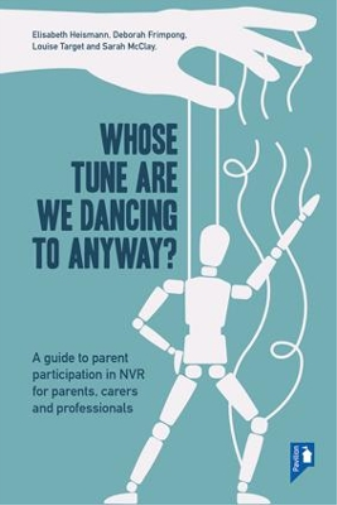
A guide to parent participation in Non-violent Resistance (NVR) for parents, carers and professionals. This book complements the Pavilion training pack designed for parent participation training in Non-violent Resistance, by making the model, its practice and powerful parent stories available to professionals, parents, foster carers and others who are supporting children and adolescents in a range of settings. Parent participation in Non-violent Resistance (NVR) is an approach developed by author Elisabeth Heismann and colleagues that uses principles of NVR to help carers resist violent and out of control behaviours and to establish a warm, loving and containing parental presence with their children. It is based on 15 years of collaborative practice in various settings and organisations and is presented as a formula for good practice.In this unique book, three parents with lived experience of using NVR and a family therapist who has used the approach extensively, demonstrate the experience and positive impact of parent participation in NVR in one of London's most polarized boroughs in terms of the distribution of wealth and deprivation, where gang problems, knife crime and child sexual exploitation are rife. The challenges they have faced represent issues many families experience in the UK and beyond, where young people, families and communities can feel judged and pathologized as 'bad' and consequently do not voluntarily access existing social care, mental health and educational services, or want to 'dance to their tune'.
ADDITIONAL DETAILS
DELIVERY & RETURNS
UK Delivery:
- Free delivery on all orders of £10 or more.
- £1.49 delivery fee on orders below £10.
- UK orders are shipped via Royal Mail 2nd Class.
International Delivery:
- Flat rate delivery charges vary by country.
Dispatch and Delivery Times:
- All orders are shipped from our warehouse in Northampton, UK within 48 hours of receipt during working hours.
- UK mainland orders typically arrive within 3-5 working days via Royal Mail 2nd Class.
- International estimated delivery times:
- Europe & Channel Islands: 7 to 10 working days
- USA: 7 to 15 working days
- Rest of the World: 9 to 21 working days
View our full delivery infomation here.
-
OVER
2 MILLION PRODUCTS
-
60 MILLION CUSTOMERS
ACROSS 190 COUNTRIES
You might also like
Loading recommendations...