

Place-Names and Landholding in Early Medieval England
Place-Names and Landholding in Early Medieval England
The meaning and uses of tūn
Paperback
Couldn't load pickup availability
Join our rewards scheme and earn reward points on this purchase!
Earn points on this!
Sign in or Sign up!- Release Date: 16/03/2026
- Barcode: 9781912260768
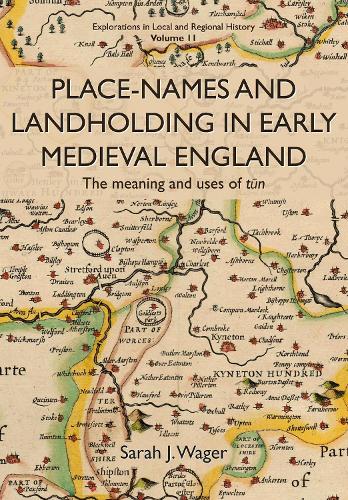

Place-Names and Landholding in Early Medieval England
Couldn't load pickup availability
Collapsible content
DESCRIPTION
The meaning and uses of tūn
This book discusses how various recurrent early medieval place-names ending in tūn might have originated in response to social, economic, political or religious factors.
This book discusses how various recurrent early medieval place-names ending in tūn might have originated in response to social, economic, political or religious factors. It considers specifically whether these names might, as some scholars have suggested, reflect a possible function related to one or more aspects of early medieval society but which is not apparent from their etymology.
It examines studies of names such as Stretton, Eaton, Burton and Kingston and questions recent theories around suggested functions for these places. The author proposes that most of these recurrent compounds named a land unit distinguished by a simple topographical feature or by the name or status of the landholder rather than by a presumed function. She also considers the hypothesis that the perceived concentration of certain recurrent names in clusters, largely in the central and southern regions of England, was the result of a deliberate designation of these places to provide a function in the strategic defence and administration of Mercia during the eighth and early ninth centuries, with some other kingdoms, especially Wessex, following the Mercian example. She has sought to explain why there is not enough evidence to substantiate, or disprove, the hypothesis about clusters of ‘functional’ place-names and at the same time to show that there is enough evidence to cast doubt on that hypothesis and the nature of the data used to support it.
The meaning and uses of tūn, regarded as the commonest element in English place-names, are part of the argument presented in this book. In the light of archaeological and related research in recent decades, some of the past translations of tūn are no longer tenable. This book argues for a general meaning of a defined area of land, held as a unit with rights over the land and its people. The widespread use of tūn reflects a society where landholding was essential to survival and for wealth and power.
DELIVERY & RETURNS
UK Delivery:
- Free delivery on all orders of £10 or more.
- £1.49 delivery fee on orders below £10.
- UK orders are shipped via Royal Mail 2nd Class.
International Delivery:
- Flat rate delivery charges vary by country.
Dispatch and Delivery Times:
- All orders are shipped from our warehouse in Northampton, UK within 48 hours of receipt during working hours.
- UK mainland orders typically arrive within 3-5 working days via Royal Mail 2nd Class.
- International estimated delivery times:
- Europe & Channel Islands: 7 to 10 working days
- USA: 7 to 15 working days
- Rest of the World: 9 to 21 working days
View our full delivery infomation here.
-
OVER
2 MILLION PRODUCTS
-
60 MILLION CUSTOMERS
ACROSS 190 COUNTRIES
You might also like
Loading recommendations...