

Taking a Walk
Taking a Walk
Hardback
Couldn't load pickup availability
Join our rewards scheme and earn reward points on this purchase!
Earn points on this!
Sign in or Sign up!- Release Date: 05/02/2024
- Barcode: 9781912186808
- Genre: Sports & Hobbies
- Subgenre: History
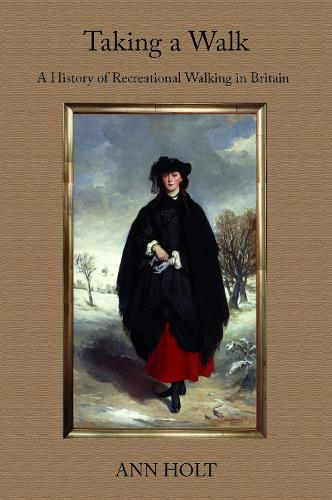

Taking a Walk
Couldn't load pickup availability
Collapsible content
DESCRIPTION
A History of Recreational Walking in Britain. Walking has appealed to all sorts of people throughout its long recorded history, and this volume delves into a rich variety of sources about walking from the 12th to the 20th century, including diaries, letters, memoirs, poems, fiction, government reports and newspapers. Strolling and striding through Britain's historyWalking is a simple and popular recreation, but one that comes freighted with meaning, social attitudes and value judgements. We are not simply left to walk if we feel like it - we are urged by various levels of government and opinion formers to walk more, in order to help the environment or improve our mental and physical health. What is recreational walking anyway? A walk can be a stroll round a small open space in a city or a long hike over demanding terrain in weather that blurs the boundary between exercise and endurance. The stroller and the strider can be the same person at different times, though most walkers have a preference for one end of the spectrum. Walking has appealed to all sorts of people throughout its long recorded history, and this volume delves into a rich variety of sources about walking from the 12th to the 20th century, including diaries, letters, memoirs, poems, fiction, government reports and newspapers.The more committed have not only enjoyed walking but have thought of themselves and been recognised by others as 'walkers', even though all manner of people have walked for recreation. Walking in a socially approved place, in the right sort of clothing, observing the decorum of the time, was a mark of respectability until quite recently. When large numbers of young people were able to take new opportunities to get to the countryside in the 1920s and 1930s, dressing and behaving in ways that expressed their own needs and desires, they were often seen as comic, deplorably urban, socially inferior and in the wrong place. Walkers of all kinds have frequently been regarded as 'in the wrong place'. In the countryside the walker is potentially in disputed territory, questioning one of the sacred tenets of post-enclosure Britain - the association of landownership with power, prestige and the foundations of the social order. This has led to the pattern of exclusion which marks our present relationship with the countryside. In response, an organised social movement to represent the interests and advance the causes of recreational walking claimed a place in the politics of landownership, which is once again in the public eye.
DELIVERY & RETURNS
UK Delivery:
- Free delivery on all orders of £10 or more.
- £1.49 delivery fee on orders below £10.
- UK orders are shipped via Royal Mail 2nd Class.
International Delivery:
- Flat rate delivery charges vary by country.
Dispatch and Delivery Times:
- All orders are shipped from our warehouse in Northampton, UK within 48 hours of receipt during working hours.
- UK mainland orders typically arrive within 3-5 working days via Royal Mail 2nd Class.
- International estimated delivery times:
- Europe & Channel Islands: 7 to 10 working days
- USA: 7 to 15 working days
- Rest of the World: 9 to 21 working days
View our full delivery infomation here.
-
OVER
2 MILLION PRODUCTS
-
60 MILLION CUSTOMERS
ACROSS 190 COUNTRIES
You might also like
Loading recommendations...