

Natural Product Biosynthesis
Natural Product Biosynthesis
Chemical Logic and Enzymatic Machinery
Hardback
Couldn't load pickup availability
Join our rewards scheme and earn reward points on this purchase!
Earn points on this!
Sign in or Sign up!- Release Date: 14/12/2022
- Barcode: 9781839165641
- Imprint: Royal Society of Chemistry
- Publisher: Royal Society of Chemistry

Natural Product Biosynthesis
Couldn't load pickup availability
Collapsible content
DESCRIPTION
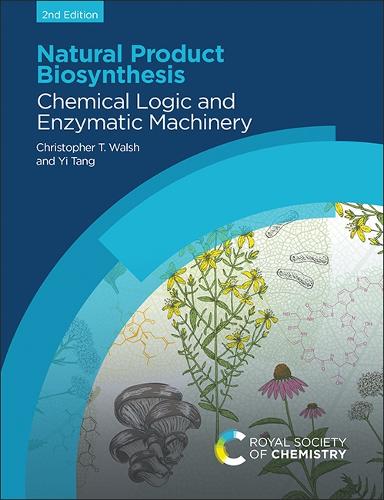
Chemical Logic and Enzymatic Machinery This second edition integrates many new findings into the underlying enzymatic mechanisms and the catalytic machinery for building the varied and complex end product metabolites. This text will serve as a reference point for chemists of every subdiscipline, including synthetic organic chemists and medicinal chemists. Authored by leading experts in the enzymology of natural product biosynthesis, this completely revised and updated edition provides a description of the types of natural products, the biosynthetic pathways that enable the production of these molecules, and an update on the discovery of novel products in the post-genomic era. Although some 500 000 – 600 000 natural products have been isolated and characterized over the past two centuries, there may be a 10-fold greater inventory awaiting immediate exploration based on biosynthetic gene cluster predictions. The approach of this book is to codify the chemical logic that underlies each natural product structural class as they are assembled from building blocks of primary metabolism. This second edition integrates many new findings into the sets of principles of the first edition that parsed categories of natural product chemistries into the underlying enzymatic mechanisms and the catalytic machinery for building the varied and complex end product metabolites. New chapters include evaluation of a core set of thermodynamically activated but kinetically stable metabolites that power both primary and secondary metabolic pathways. Also, after decades of uncertainty about the existence of various pericyclase classes, a series of genome mining, heterologous expression, and enzymatic activity characterization have validated a plethora of pericyclases over the past decade. The several types of pericyclases are involved in biosynthetic complexity generation of almost every major category of natural products. This text will serve as a reference point for chemists of every subdiscipline, including synthetic organic chemists and medicinal chemists. It will also be valuable to bioinformatic and computational biologists, pharmacognocists and chemical ecologists, and bioengineers and synthetic biologists.
ADDITIONAL DETAILS
DELIVERY & RETURNS
UK Delivery:
- Free delivery on all orders of £10 or more.
- £1.49 delivery fee on orders below £10.
- UK orders are shipped via Royal Mail 2nd Class.
International Delivery:
- Flat rate delivery charges vary by country.
Dispatch and Delivery Times:
- All orders are shipped from our warehouse in Northampton, UK within 48 hours of receipt during working hours.
- UK mainland orders typically arrive within 3-5 working days via Royal Mail 2nd Class.
- International estimated delivery times:
- Europe & Channel Islands: 7 to 10 working days
- USA: 7 to 15 working days
- Rest of the World: 9 to 21 working days
View our full delivery infomation here.
-
OVER
2 MILLION PRODUCTS
-
60 MILLION CUSTOMERS
ACROSS 190 COUNTRIES
You might also like
Loading recommendations...