

The Struggle for Mastery in Ireland, 1442-1540
The Struggle for Mastery in Ireland, 1442-1540
Hardback
Couldn't load pickup availability
Join our rewards scheme and earn reward points on this purchase!
Earn points on this!
Sign in or Sign up!- Release Date: 19/03/2024
- Barcode: 9781837650521
- Genre: History
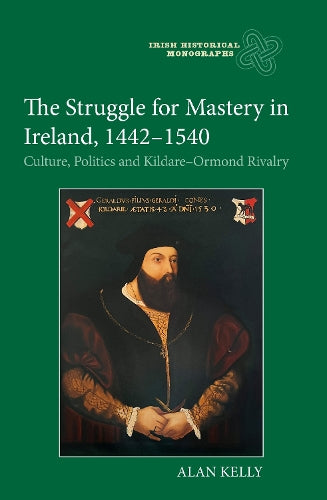

The Struggle for Mastery in Ireland, 1442-1540
Couldn't load pickup availability
Collapsible content
DESCRIPTION
Culture, Politics and Kildare-Ormond Rivalry
A reassessment of the rivalry between the two great Anglo-Norman magnate families in late medieval and early modern Ireland.
A reassessment of the rivalry between the two great Anglo-Norman magnate families in late medieval and early modern Ireland, putting forward a new interpretation of events.The Fitzgerald Earls of Kildare and the Butler Earls of Ormond were the foremost old colonial magnates in the late medieval Lordship of Ireland. Rivals for power and influence throughout the island but in particular for the post of chief governor, the principal representative of the English crown in Ireland, their struggle for mastery expressed itself in multiple ways ranging from competition for cultural hegemony to outright military confrontation. This book, based on extensive original research including hitherto unexplored evidence from literary sources and material culture, serves to counterbalance the anti-Kildare impression given by official documents such as the State Papers, which stressed that the objective of a military conquest of Gaelic Ireland was paramount. Instead, the book argues that the Kildare-Ormond rivalry was a more subtle and sophisticated conflict between two different concepts of what Ireland should be, the frequently dominant Fitzgeralds promoting the idea of Ireland as an integrated polity with the recognition and co-option of leading figures in Gaelic Ireland, the opposing Butlers embodying the traditional Cambro-Norman ideas of conquest. However, it is further argued that these opposing positions were not fundamental but conditional, dependent upon which great house held the chief governorship. The book elaborates on these alternating concepts of Ireland, showing how the political war between the two magnate families, and the accompanying culture war, played out over time.
DELIVERY & RETURNS
UK Delivery:
- Free delivery on all orders of £10 or more.
- £1.49 delivery fee on orders below £10.
- UK orders are shipped via Royal Mail 2nd Class.
International Delivery:
- Flat rate delivery charges vary by country.
Dispatch and Delivery Times:
- All orders are shipped from our warehouse in Northampton, UK within 48 hours of receipt during working hours.
- UK mainland orders typically arrive within 3-5 working days via Royal Mail 2nd Class.
- International estimated delivery times:
- Europe & Channel Islands: 7 to 10 working days
- USA: 7 to 15 working days
- Rest of the World: 9 to 21 working days
View our full delivery infomation here.
-
OVER
2 MILLION PRODUCTS
-
60 MILLION CUSTOMERS
ACROSS 190 COUNTRIES
You might also like
Loading recommendations...