

Polymerisation and Depolymerisation
Polymerisation and Depolymerisation
Faraday Discussion 262
Hardback
Couldn't load pickup availability
Join our rewards scheme and earn reward points on this purchase!
Earn points on this!
Sign in or Sign up!- Release Date: 16/02/2026
- Barcode: 9781837070688
- Imprint: Royal Society of Chemistry
- Publisher: Royal Society of Chemistry
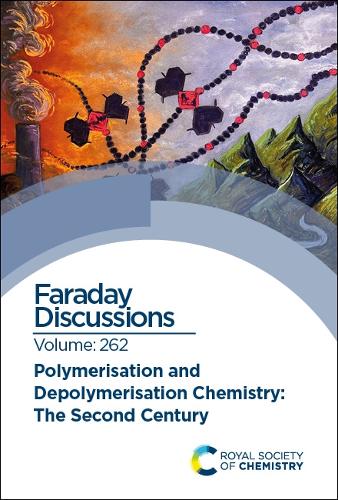

Polymerisation and Depolymerisation
Couldn't load pickup availability
Collapsible content
DESCRIPTION
Faraday Discussion 262 There is a pressing need to close the loop on production, use and disposal of polymer materials. This volume discusses approaches to making and breaking polymers for a more sustainable future. This Faraday Discussion focuses on the scientific questions, challenges and areas for future development to advance polymer science. It comprises the following interrelated themes: Novel feedstocks This section focuses on the chemistry and processes to make monomers and to functionalise natural biopolymers. It includes papers on the use and benefits for biomass derived monomers, such as those from carbohydrates, triglycerides, lignin and terpenes, with a particular focus on use of co-products and wastes in polymer production. Catalysis This section investigates how catalysis can be used to make polymerisation processes more efficient and more sustainable, and to control polymer sequences, stereo- and regiochemistry, so as to enable innovative material and properties. Discussion topics include organocatalysis, metal-based catalysis and heterogeneous catalysis, the synthesis of novel catalytic systems, the elucidation of catalytic reactions using experimental and computational methods (including in situ reaction monitoring), and the impact of residual catalytic species on polymer properties. Polymerisation processes and computational methods to control structure This section discusses how to regulate, control and effect control over polymer sequences, structures, architectures and molar mass distributions by using external stimuli and process control. The section also covers how data and machine learning-driven approaches can help to improve polymerisation processes. The types of chemistry discussed include ‘triggers/switches and stimuli’, methods to control molar mass distributions, polymer syntheses in flow, and computational approaches to optimise structures and performances. Closing the loop – the chemistry of depolymerisation, polymer recycling and environmental degradation This section examines the chemistry and fundamental science challenges associated with the different end-life options for polymers. Discussion topics include chemical recycling, designing polymer structures for efficient mechanical recycling, polymer upcycling and re-purposing, depolymerisation kinetics/thermodynamics and mechanisms, depolymerisation catalysis, polymer composting and biodegradation. The environmental chemistry of polymers is also discussed. Future opportunities to combine effective polymerisation and depolymerisation strategies into the design of polymer structures are at the heart of this section and the associated discussions.
ADDITIONAL DETAILS
DELIVERY & RETURNS
UK Delivery:
- Free delivery on all orders of £10 or more.
- £1.49 delivery fee on orders below £10.
- UK orders are shipped via Royal Mail 2nd Class.
International Delivery:
- Flat rate delivery charges vary by country.
Dispatch and Delivery Times:
- All orders are shipped from our warehouse in Northampton, UK within 48 hours of receipt during working hours.
- UK mainland orders typically arrive within 3-5 working days via Royal Mail 2nd Class.
- International estimated delivery times:
- Europe & Channel Islands: 7 to 10 working days
- USA: 7 to 15 working days
- Rest of the World: 9 to 21 working days
View our full delivery infomation here.
-
OVER
2 MILLION PRODUCTS
-
60 MILLION CUSTOMERS
ACROSS 190 COUNTRIES
You might also like
Loading recommendations...