

Neolithic Timber Halls and a Bronze Age Settlement with Hoard at Carnoustie, Angus
Neolithic Timber Halls and a Bronze Age Settlement with Hoard at Carnoustie, Angus
Hardback
Couldn't load pickup availability
Join our rewards scheme and earn reward points on this purchase!
Earn points on this!
Sign in or Sign up!- Release Date: 27/11/2025
- Barcode: 9781805831334
- Genre: History
- Sub-Genre: Archaeology
- Imprint: Archaeopress
- Publisher: Archaeopress
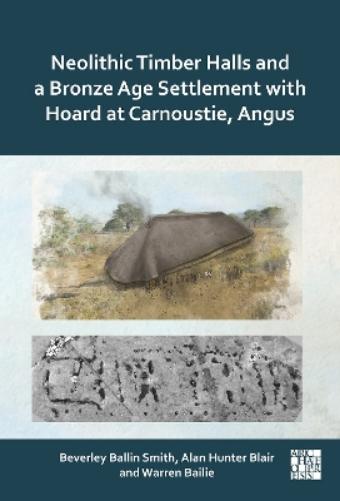

Neolithic Timber Halls and a Bronze Age Settlement with Hoard at Carnoustie, Angus
Couldn't load pickup availability
Collapsible content
DESCRIPTION
Carnoustie excavations revealed Scotland’s longest early Neolithic timber hall, with evidence of continuity in building traditions. Later Neolithic pits suggest social change. After early Bronze Age abandonment, roundhouses emerged, ending with a rare metalwork hoard buried nearby. Excavations at Carnoustie produced exceptional archaeological results from the prehistoric past. The remains of the longest early Neolithic timber hall so far found in Scotland were identified. Beside it were the postholes and pits of another contemporary but less well preserved large hall. A final but smaller timber hall was constructed at one end but within the footprint of the largest timber hall. This latter structure indicated the importance of the place and the perpetuation of ideologies and traditions of the earlier building. During the later Neolithic, other evidence included the sparse remains of an oval house built over the remains of one timber hall with temporary re-occupation of part of another. The main focus of activities during the middle and late Neolithic were groups of pits whose presence indicated changes in social structure and possibly economic conditions. A period of abandonment with only sporadic use of the area during the early Bronze Age was followed by a roundhouse settlement. A small number of buildings of the middle and late Bronze Age were replaced in rotation. The last buildings were intimately associated with a rare late Bronze Age metalwork hoard, buried close to them. The hoard included a sword, spearhead with gold decoration and a long pin wrapped in textile and sheep-skin.
DELIVERY & RETURNS
UK Delivery:
- Free delivery on all orders of £10 or more.
- £1.49 delivery fee on orders below £10.
- UK orders are shipped via Royal Mail 2nd Class.
International Delivery:
- Flat rate delivery charges vary by country.
Dispatch and Delivery Times:
- All orders are shipped from our warehouse in Northampton, UK as soon as stock is available.
- UK mainland orders typically arrive within 3-7 working days via Royal Mail 2nd Class.
- International estimated delivery times:
- Europe & Channel Islands: 7 to 10 working days
- USA: 7 to 15 working days
- Rest of the World: 9 to 30 working days
View our full delivery infomation here.
-
OVER
2 MILLION PRODUCTS
-
60 MILLION CUSTOMERS
ACROSS 190 COUNTRIES
You might also like
Loading recommendations...