

Frontiers of the Roman Empire: The Hinterland of Hadrian̕s Wall
Frontiers of the Roman Empire: The Hinterland of Hadrian̕s Wall
Frontières de l'Empire Romain: L'arrière-pays du mur d'Hadrien
Paperback
Couldn't load pickup availability
Join our rewards scheme and earn reward points on this purchase!
Earn points on this!
Sign in or Sign up!- Release Date: 14/09/2023
- Barcode: 9781803275475
- Genre: History
- Sub-Genre: Archaeology
- Imprint: Archaeopress
- Publisher: Archaeopress
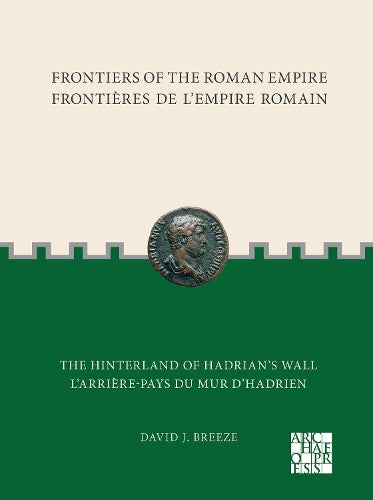

Frontiers of the Roman Empire: The Hinterland of Hadrian̕s Wall
Couldn't load pickup availability
Collapsible content
DESCRIPTION
Frontières de l'Empire Romain: L'arrière-pays du mur d'Hadrien The frontiers of the Roman Empire together form the largest monument of one of the world’s greatest ancient states. They stretch for some 7,500 km through 20 countries which encircle the Mediterranean Sea. The remains of these frontiers have been studied by visitors and later by archaeologists for several centuries. Many of the inscriptions and sculptures, weapons, pottery and artefacts created and used by the soldiers and civilians who lived on the frontier can be seen in museums. Equally evocative of the lost might of Rome are the physical remains of the frontiers themselves. The aim of this series of books is not only to inform the interested visitor about the history of the frontiers but to act as a guidebook as well. In this important and beautifully illustrated book, David Breeze elucidates the context of the most famous frontier, Hadrian’s Wall. The zone to north and south of the Wall was a heavily militarised landscape of roads, bridges, forts, fortlets and towers, but also the towns, settlements and supply infrastructure on which the army depended. As the invaluable gazetteer shows, the area is now rich in superb sites and museums, allowing modern people countless rich insights into the world of the soldiers and civilians of the period.
In this important and beautifully illustrated book, David Breeze elucidates the context of the most famous frontier, Hadrian’s Wall. The zone to north and south of the Wall was a heavily militarised landscape of roads, bridges, forts, fortlets and towers, but also the towns, settlements and supply infrastructure on which the army depended.
DELIVERY & RETURNS
UK Delivery:
- Free delivery on all orders of £10 or more.
- £1.49 delivery fee on orders below £10.
- UK orders are shipped via Royal Mail 2nd Class.
International Delivery:
- Flat rate delivery charges vary by country.
Dispatch and Delivery Times:
- All orders are shipped from our warehouse in Northampton, UK within 48 hours of receipt during working hours.
- UK mainland orders typically arrive within 3-5 working days via Royal Mail 2nd Class.
- International estimated delivery times:
- Europe & Channel Islands: 7 to 10 working days
- USA: 7 to 15 working days
- Rest of the World: 9 to 21 working days
View our full delivery infomation here.
-
OVER
2 MILLION PRODUCTS
-
60 MILLION CUSTOMERS
ACROSS 190 COUNTRIES
You might also like
Loading recommendations...