

Sit tibi terra gravis: Sepolture anomale tra età medievale e moderna
Sit tibi terra gravis: Sepolture anomale tra età medievale e moderna
Paperback
Couldn't load pickup availability
Join our rewards scheme and earn reward points on this purchase!
Earn points on this!
Sign in or Sign up!- Release Date: 27/07/2023
- Barcode: 9781803274751
- Genre: History
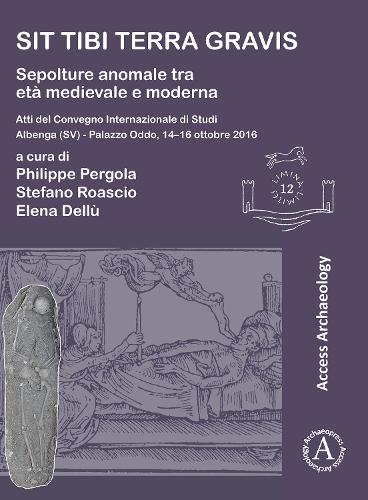

Sit tibi terra gravis: Sepolture anomale tra età medievale e moderna
Couldn't load pickup availability
Collapsible content
DESCRIPTION
Atti del Convegno Internazionale di Studi Albenga (SV) – Palazzo Oddo, 14-16 ottobre 2016. Papers in this volume explore the phenomenon of anomalous burials on a European scale, with an interdisciplinary reading between archaeology, history, physical and cultural anthropology. Between 2014 and 2015 in the excavations of the church of San Calocero in Albenga (Savona - Italy) two burials of young post-medieval women with particular and anomalous characteristics were brought to light. The first inhumation was prone and placed in a deep grave isolated from the cemetery; the second had partially burnt bone remains and was covered by an accumulation of large stones. The find immediately had a vast international echo, which already during the excavation led to the organization of a first in-depth scientific meeting.
Sit tibi terra gravis - Anomalous burials between the medieval and modern ages publishes the proceedings of a 2016 international conference of the same name. The contributions explore the phenomenon of anomalous burials on a European scale, with an interdisciplinary reading between archaeology, history, physical and cultural anthropology. Thirty-three contributions by sixty-two scholars are divided into four sessions: “Deviant burials”: case studies from the Italian territory; “Deviant burials” from European contexts; Anthropology and Archaeology compared; The indicators in the tombs, allowing to develop a broad and articulated study path on this phenomenon.
DELIVERY & RETURNS
UK Delivery:
- Free delivery on all orders of £10 or more.
- £1.49 delivery fee on orders below £10.
- UK orders are shipped via Royal Mail 2nd Class.
International Delivery:
- Flat rate delivery charges vary by country.
Dispatch and Delivery Times:
- All orders are shipped from our warehouse in Northampton, UK within 48 hours of receipt during working hours.
- UK mainland orders typically arrive within 3-5 working days via Royal Mail 2nd Class.
- International estimated delivery times:
- Europe & Channel Islands: 7 to 10 working days
- USA: 7 to 15 working days
- Rest of the World: 9 to 21 working days
View our full delivery infomation here.
-
OVER
2 MILLION PRODUCTS
-
60 MILLION CUSTOMERS
ACROSS 190 COUNTRIES
You might also like
Loading recommendations...