

Community Archaeology: Working Ancient Aboriginal Wetlands in Eastern Australia
Community Archaeology: Working Ancient Aboriginal Wetlands in Eastern Australia
Paperback
Couldn't load pickup availability
Join our rewards scheme and earn reward points on this purchase!
Earn points on this!
Sign in or Sign up!- Release Date: 06/04/2023
- Barcode: 9781789694802
- Imprint: Archaeopress
- Publisher: Archaeopress
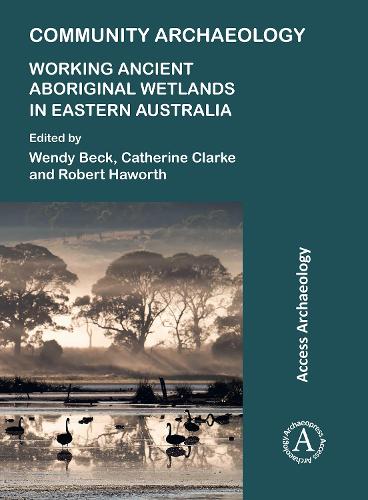

Community Archaeology: Working Ancient Aboriginal Wetlands in Eastern Australia
Couldn't load pickup availability
Collapsible content
DESCRIPTION
This volume presents the results of an investigation of wetland heritage in eastern Australia, with important contributions to the archaeology of the Tasmanian Midlands and the New England Tablelands.
Community Archaeology presents the results of an investigation of wetland heritage in eastern Australia, with important contributions to the archaeology of the Tasmanian Midlands and the New England Tablelands. In this first substantial project in these bioregions since 1991, OSL and radiocarbon dating at lagoon sites provided dates going back to 8000 BP, significantly extending previous information. In both regions a range of stone artefact scatters were recorded adjacent to lagoons, suggesting associated ceremonial activities. Across the regions, new OSL dates were obtained for lunette formation. These were unexpectedly diverse, with OSL dates not clustered around the Last Glacial Maximum at 20k. With sediment particle sizes suggesting both wind and water deposition, quite individual local lunette depositional histories not closely related to global climates are indicated.
The book also contributes to the important global field of community engagement and education. Unlike most projects where Aboriginal people are involved in commercial archaeology, this project focussed on research. Community Elders were research team partners during fieldwork and training. Work-integrated -learning, at University and on-country locations, proved very successful as a learning approach for young participants.
ADDITIONAL DETAILS
DELIVERY & RETURNS
UK Delivery:
- Free delivery on all orders of £10 or more.
- £1.49 delivery fee on orders below £10.
- UK orders are shipped via Royal Mail 2nd Class.
International Delivery:
- Flat rate delivery charges vary by country.
Dispatch and Delivery Times:
- All orders are shipped from our warehouse in Northampton, UK within 48 hours of receipt during working hours.
- UK mainland orders typically arrive within 3-5 working days via Royal Mail 2nd Class.
- International estimated delivery times:
- Europe & Channel Islands: 7 to 10 working days
- USA: 7 to 15 working days
- Rest of the World: 9 to 21 working days
View our full delivery infomation here.
-
OVER
2 MILLION PRODUCTS
-
60 MILLION CUSTOMERS
ACROSS 190 COUNTRIES
You might also like
Loading recommendations...