

Amorous Aesthetics
Amorous Aesthetics
Hardback
Couldn't load pickup availability
Join our rewards scheme and earn reward points on this purchase!
Earn points on this!
Sign in or Sign up!- Release Date: 27/03/2019
- Barcode: 9781786940834
- Genre: Literary Criticism
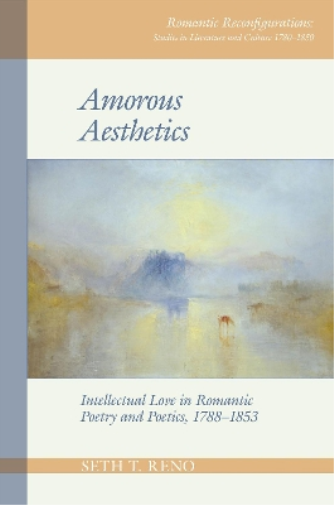

Amorous Aesthetics
Couldn't load pickup availability
Collapsible content
DESCRIPTION
Intellectual Love in Romantic Poetry and Poetics, 1788–1853. Amorous Aesthetics traces the development of intellectual love from its first major expression in Baruch Spinoza’s Ethics, through its adoption and adaptation in eighteenth-century moral and natural philosophy, to its emergence as a Romantic tradition in the work of six major poets. Situated at the intersection of affect studies, ecocriticism, aesthetics, and Romantic studies, this book presents a genealogy of love in Romantic-era poetry, science, and philosophy. While feeling and emotion have been traditional mainstays of Romantic literature, the concept of love is under-studied and under-appreciated, often neglected or dismissed as idealized, illusory, or overly sentimental. However, Seth Reno shows that a particular conception of intellectual love is interwoven with the major literary, scientific, and philosophical discourses of the period. Romantic-era writers conceived of love as integral to broader debates about the nature of life, the biology of the human body, the sociology of human relationships, the philosophy of nature, and the disclosure of being.
Amorous Aesthetics traces the development of intellectual love from its first major expression in Baruch Spinoza’s Ethics, through its adoption and adaptation in eighteenth-century moral and natural philosophy, to its emergence as a Romantic tradition in the work of six major poets. From William Wordsworth and John Clare’s love of nature, to Percy Shelley’s radical politics of love, to the more sceptical stances of Felicia Hemans, Alfred Tennyson, and Matthew Arnold, intellectual love is a pillar of Romanticism.
This book will interest scholars and students of Romanticism, eighteenth- and nineteenth-century British literature, affect studies, ecocriticism, aesthetics, and those who work at the intersection of literature and science.
DELIVERY & RETURNS
UK Delivery:
- Free delivery on all orders of £10 or more.
- £1.49 delivery fee on orders below £10.
- UK orders are shipped via Royal Mail 2nd Class.
International Delivery:
- Flat rate delivery charges vary by country.
Dispatch and Delivery Times:
- All orders are shipped from our warehouse in Northampton, UK within 48 hours of receipt during working hours.
- UK mainland orders typically arrive within 3-5 working days via Royal Mail 2nd Class.
- International estimated delivery times:
- Europe & Channel Islands: 7 to 10 working days
- USA: 7 to 15 working days
- Rest of the World: 9 to 21 working days
View our full delivery infomation here.
-
OVER
2 MILLION PRODUCTS
-
60 MILLION CUSTOMERS
ACROSS 190 COUNTRIES
You might also like
Loading recommendations...